

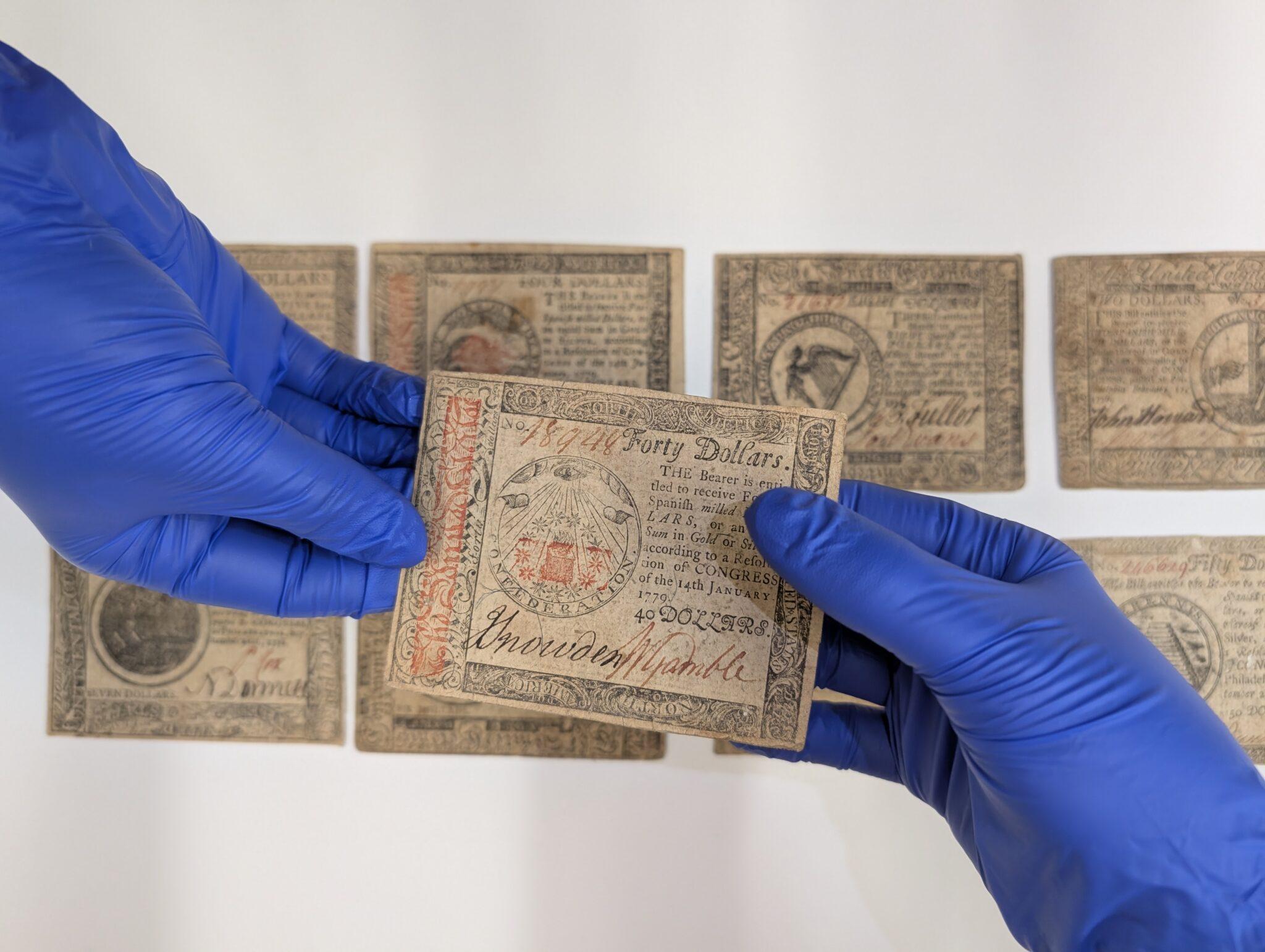
Printing, Counterfeiting, and the Fight for Trust
A Collections Chronicles Blog
By Annika Dillon, Collections and Exhibitions Management Intern
June 4, 2026
Have you ever held a piece of paper that helped create a nation? Continental Currency, more than just a wartime bill, was an early American experiment in making paper valuable, but only if people believed in it. Issued by the Continental Congress from 1775 to 1780 to finance the Revolutionary War, these notes were fragile, uncertain in value, yet meant to circulate. Their survival tells a larger story: how visual culture and collective trust shaped the making of a country.
Continental Currency captivates because it sits at the lively crossroads of printing, politics, and persuasion. As we move from its issuance to its design, the bills’ densely lettered features and carefully bordered symbols and signatures leap out, conveying authority and deterring counterfeits. More than economic tools, these notes were intended to protect credibility when it was at risk. In this way, they show how early Americans harnessed print to create value.
A selection of these paper bank notes became part of the Museum’s collection in 1991, nestled inside a large, disorganized binder—a treasure cache waiting to be explored. Picture turning the pages and discovering over 150 pieces of Continental Currency alongside 30 other fascinating bits of paper money. Antebellum Georgia dollars, World War II-era Dutch guiders, Mexican pesos from Chihuahua, all gathered together, each bearing its own story to tell.
To catalog the notes, I followed a clear sequence. First, I carefully reviewed the research and provenance notes left by previous cataloguers to understand their significance, their original organization, and any preservation issues. Next, I removed the currency from the album’s binder sleeves. I then rehoused each piece in an individual mylar sleeve for protection, and I labeled the new sleeve, not the currency, with its accession number to avoid damaging the fragile paper. Finally, I scanned all notes, measured their dimensions, and entered the documentation into the Museum’s collection management database.
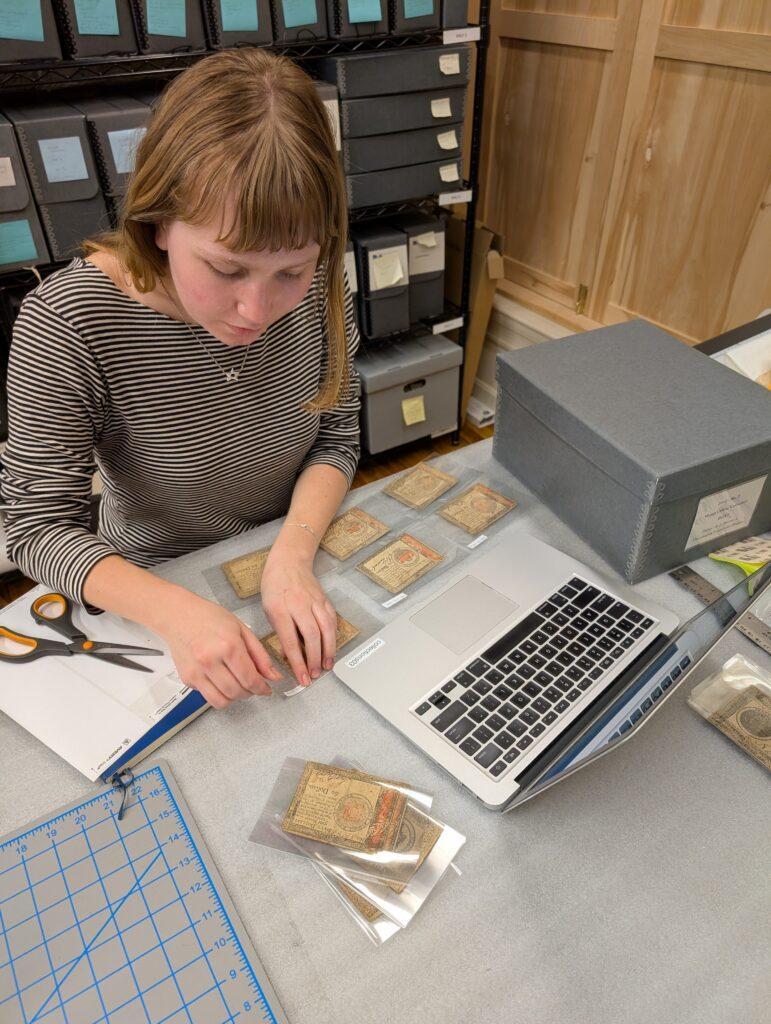
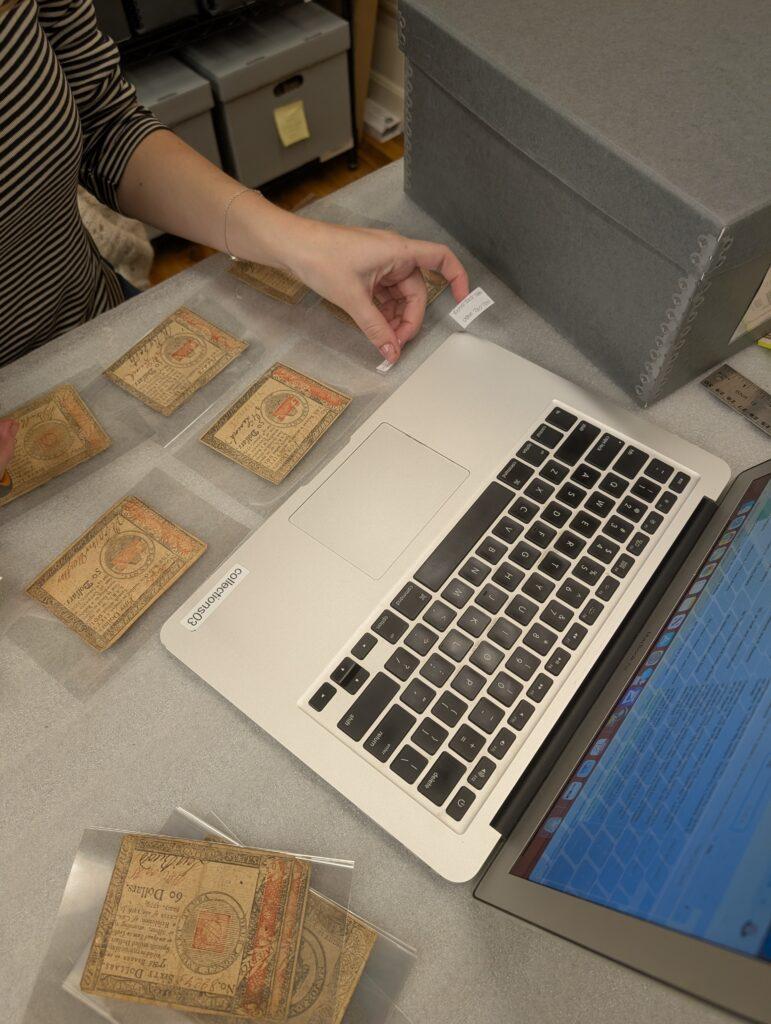
In our new exhibition, The Promise of Liberty: Words That Shaped a Nation, Continental Currency helps tell a wider story about the power of print in early America. Displayed with letters, newspapers, broadsides, and books, these bills reveal how documents shaped history. They built systems of exchange and authority in a new republic still defining itself.
Working with these fragments of history during the cataloging project changed how I understood them. On the page, Continental Currency can seem like another timeworn relic, just a failed currency, a revolutionary gamble, a record of economic chaos. But handling the objects showed how carefully they were made. I found myself admiring the careful construction of crisp paper, fine impressions, unique signatures and borders, and elaborate details that vanish in typical reproductions. Cataloging forced me to slow down and really look, to notice what others overlook. That experience revealed how much history is embedded in each individual note’s material form.
Material Trust and Revolutionary Paper Money
Continental Currency was born from urgency. In 1775, the Continental Congress authorized the issuance of paper money to finance the Revolution, creating the first federally issued currency in American history. But from the start, its value depended on public faith, a fragile foundation. Unlike coins, which carried the authority of silver or gold, paper money existed only because people agreed to accept it. That made it powerful but also vulnerable, as its worth rested on belief, easily shaken by war, rumor, shortage, or forgery.
Counterfeiting loomed as one of the era’s most insidious threats. British forces and Loyalist printers understood that destroying confidence in Continental Currency was a direct attack on the Revolution itself. Counterfeit and real notes mingled, sowing confusion. Trust became harder and harder to earn as the war dragged on and bills multiplied. Congress raced to strengthen confidence, urging states to support the currency, passing resolutions, and asking governments for help. Yet, confidence slipped away. By 1777, the notes traded at a loss. By 1780, they had lost their stability entirely.
That crisis of trust makes these notes all the more important. During the Revolution, currency served both as an economic tool and a political argument. Each bill had to win over its holder. It had to prove the Revolution was real, that Congress had authority, and that this paper stood for something larger than itself. The design, signatures, borders, emblems, and printed text all worked to persuade. Continental Currency had to look official and be hard to imitate. In a real sense, the fight for independence was also a fight over whether paper could be made believable.
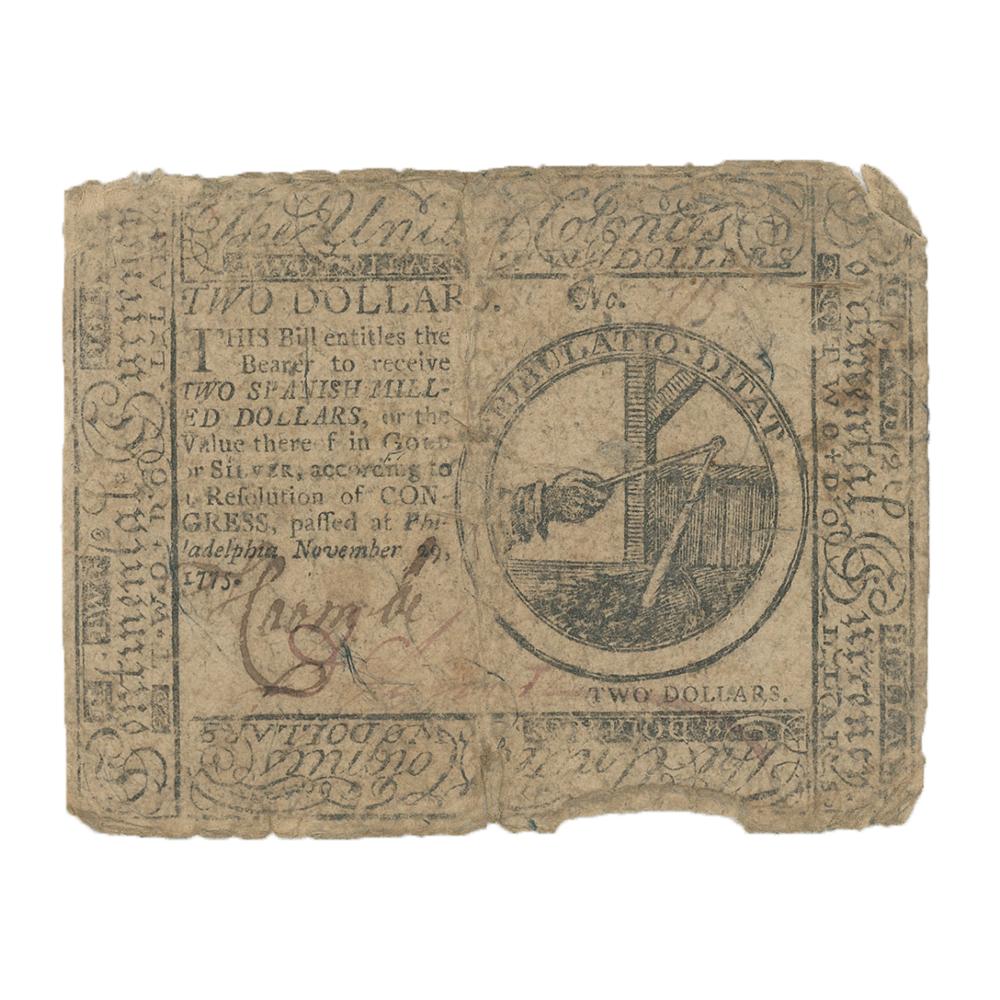
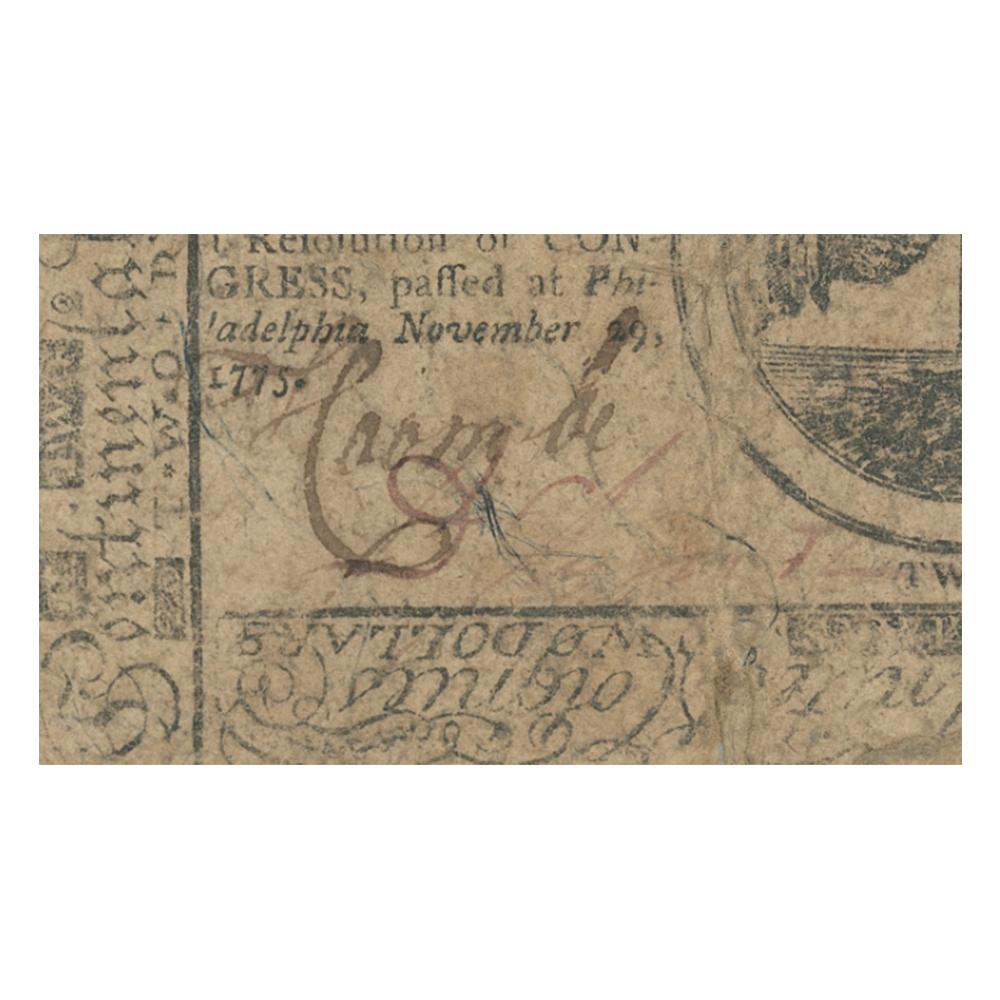
“Two Dollars, Continental Currency” November 29, 1775. Seaman’s Bank for Savings Collection 1991.072.0310
Benjamin Franklin’s role in Continental Currency goes beyond his status as a Founding Father. As a printer, inventor, and keen observer of the material world, Franklin knew that money had to do more than communicate value on paper. It had to resist depreciation. He brought that printer’s intelligence to counterfeiting and helped shape currency that was difficult to reproduce. In this way, the bills reflect Franklin’s belief that design could serve a public purpose.
Continuing from Franklin’s efforts, Franklin and David Hall’s partnership, evolving into Hall and Sellers, lies at the heart of every authentic Continental note. Philadelphia’s printing network buzzed with activity, these printers constantly inventing new ways to protect the currency. Franklin led the charge, pioneering anti-counterfeiting measures such as unique paper and natural imagery. The aim? Make a bill that no forger could match, and that everyone could trust. Looking at the notes, you can see the anti-counterfeit tactics grow bolder, and colors and patterns intensify as the circumstances demanded ever sharper defense.
One especially inventive strategy was nature printing. Early bills bore the inked impressions of real leaves, each pressed in to capture their unique texture and shape. No two leaves were alike, making forgery nearly impossible. The addition of mica and blue fibers raised the stakes; tiny blue marks, which I first mistook for ink marks, turned out to be fibers spun into the paper itself. Cataloging revealed how deliberate this was. These creative defenses show how early American currency depended on material ingenuity. Trust, after all, lived in the feel, the paper, and the physical quirks within every note.
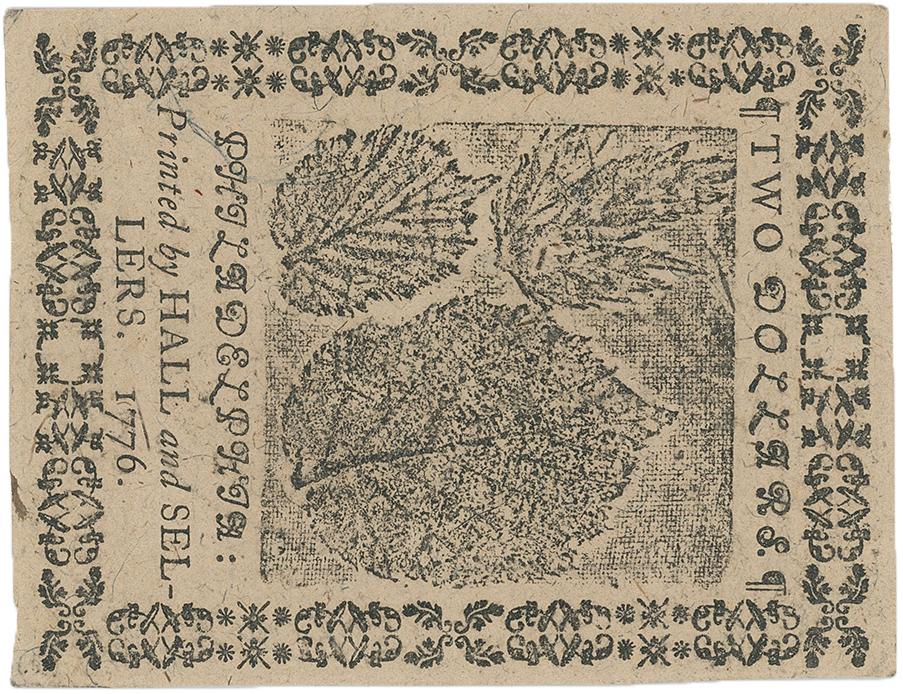
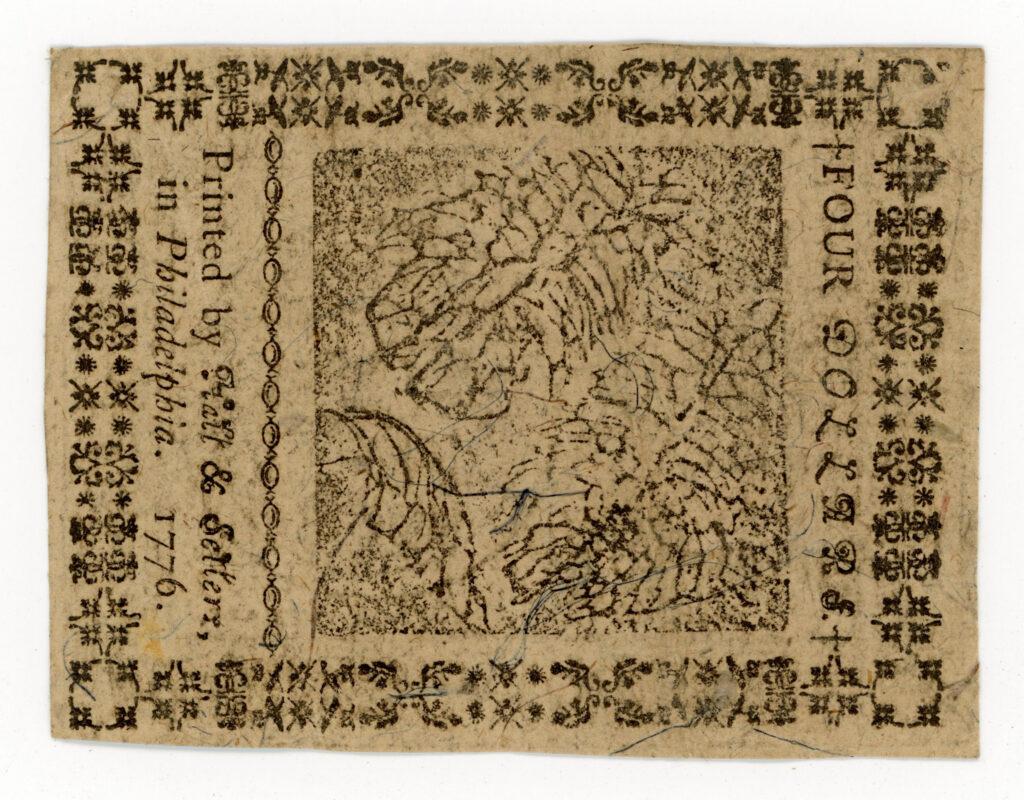
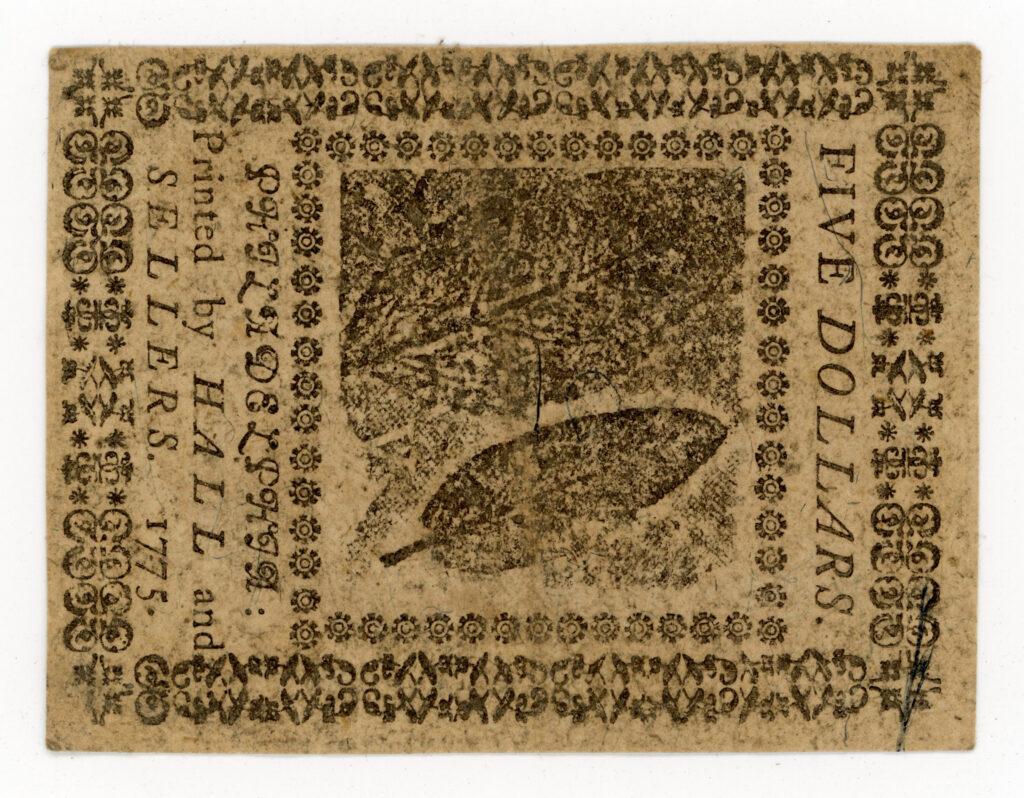
“Two Dollars, Continental Currency” February 17, 1776; “Four Dollars, Continental Currency” February 17, 1776; “Five Dollars, Continental Currency” November 29, 1775. Seaman’s Bank for Savings Collection 1991.072.0327, 1991.072.0332, 1991.072.0316
What is striking about Franklin’s contribution is that he approached counterfeiting as a design problem. He wanted to make the bill itself resistant to imitation. That logic runs through Continental Currency as a whole. The notes are crowded with borders, emblems, serial numbers, and handwritten markings precisely because they were required to outsmart counterfeiters while still looking official. In this way, Franklin’s innovations helped transform currency into a miniature print campaign for revolutionary authority.
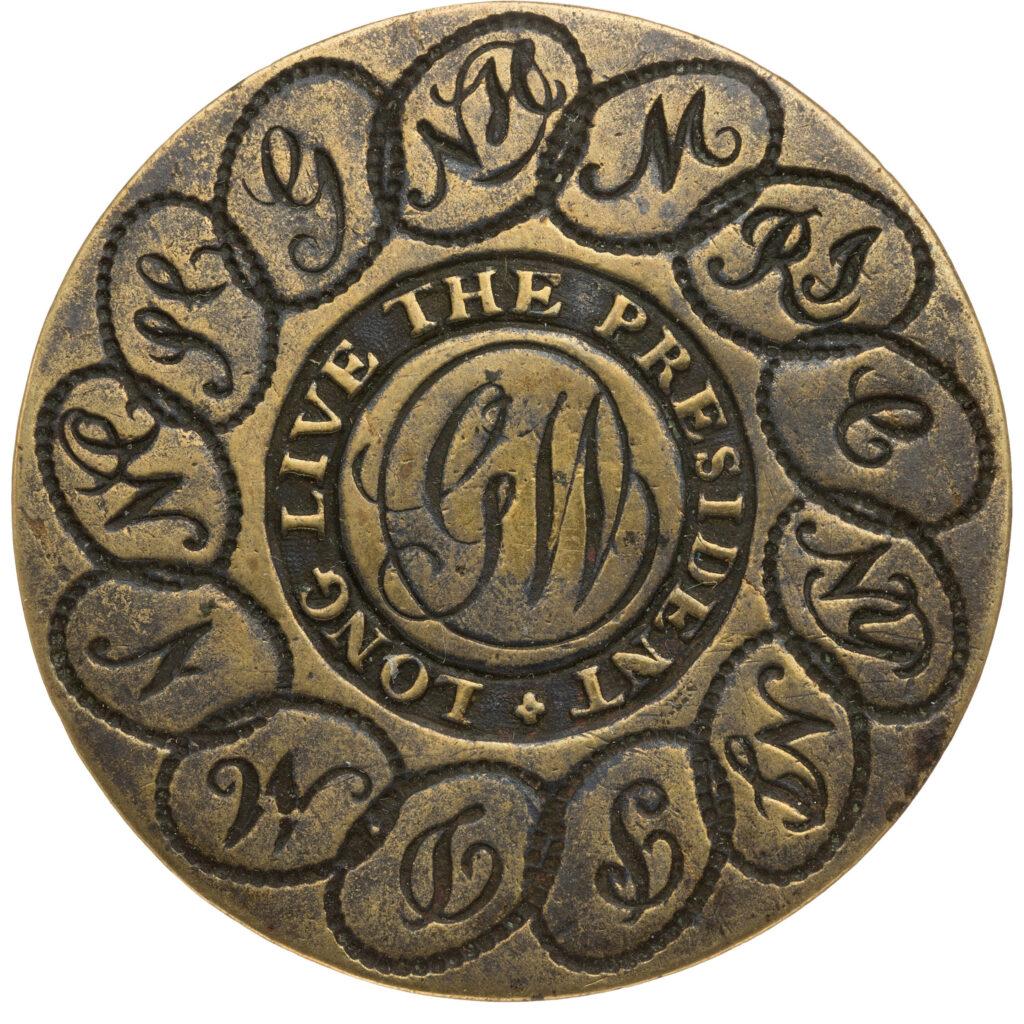
A powerful example of shared visual language appears on a Continental Currency half dollar note, whose design of linked colonies arranged in a circle is often attributed to Franklin as well. The image suggests connection, interdependence, and political unity at a moment when those ideas were still being imagined into existence. That same motif also appears on a badge made for George Washington’s inauguration, currently on display in The Promise of Liberty, where the linked colonies take on a new meaning as a symbol of national identity and emerging federal power. The note and the badge reveal how Revolutionary imagery moved across different objects and contexts, carrying the promise of union from wartime paper money into the ceremonial life of the new republic.
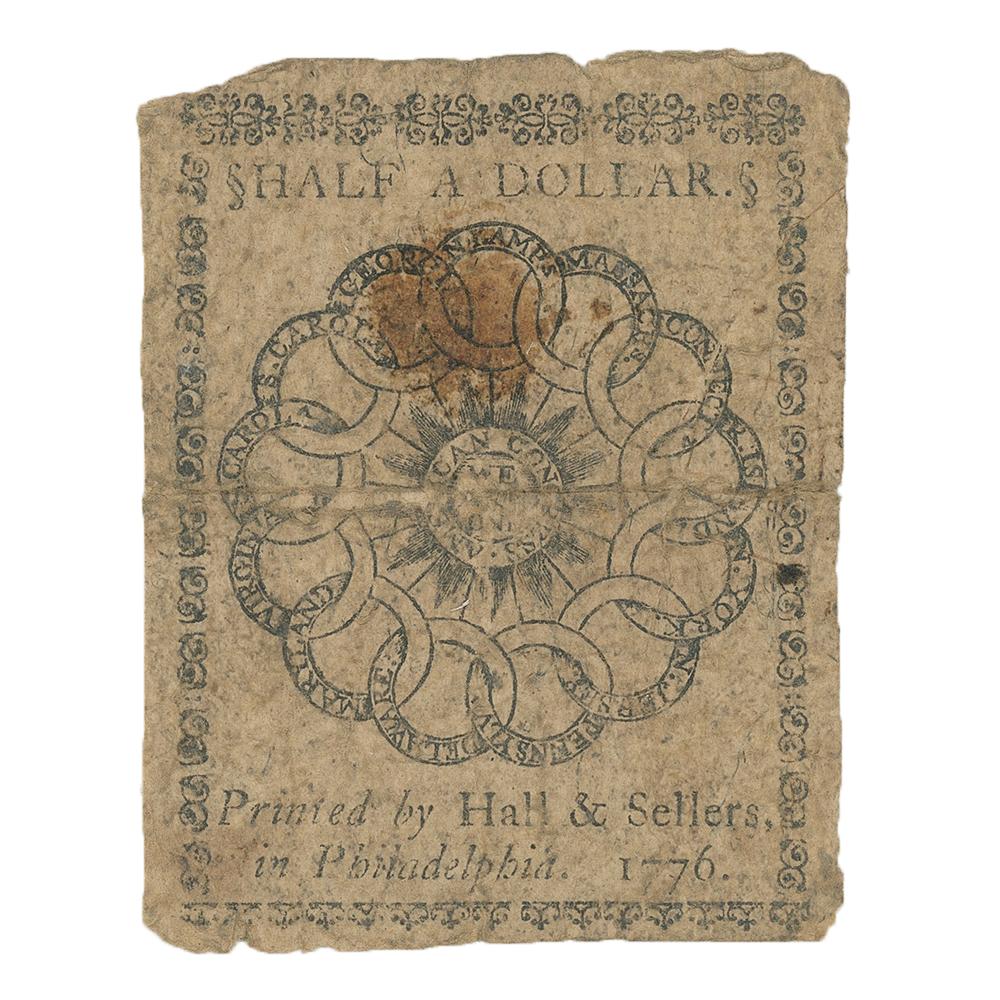
Left: “Half a Dollar, Continental Currency” February 17, 1776. Seaman’s Bank for Savings Collection 1991.072.0324
Right: “Inaugural Button, Linked States” ca. March 30, 1789. Courtesy of Mark and Rosalind Shenkman 2026.PoL.MS.001
Two of the bills currently on view within the exhibition reveal the story behind Continental Currency with a series of bold visual experiments. Visitors can see that all notes share the same basic elements: dense text, clearly stated denomination, the official language of Congress, decorative borders, and unmistakable handwritten marks, each detail strengthening a sense of authority. Yet each bill brings its own imagery and production techniques into play, showing how printers and engravers made this currency both recognizable and difficult to counterfeit. These fragile bills invite us to imagine a time when America’s trust had to be crafted in paper, a vivid indication that the nation’s founding is also a story of faith in the printed word.
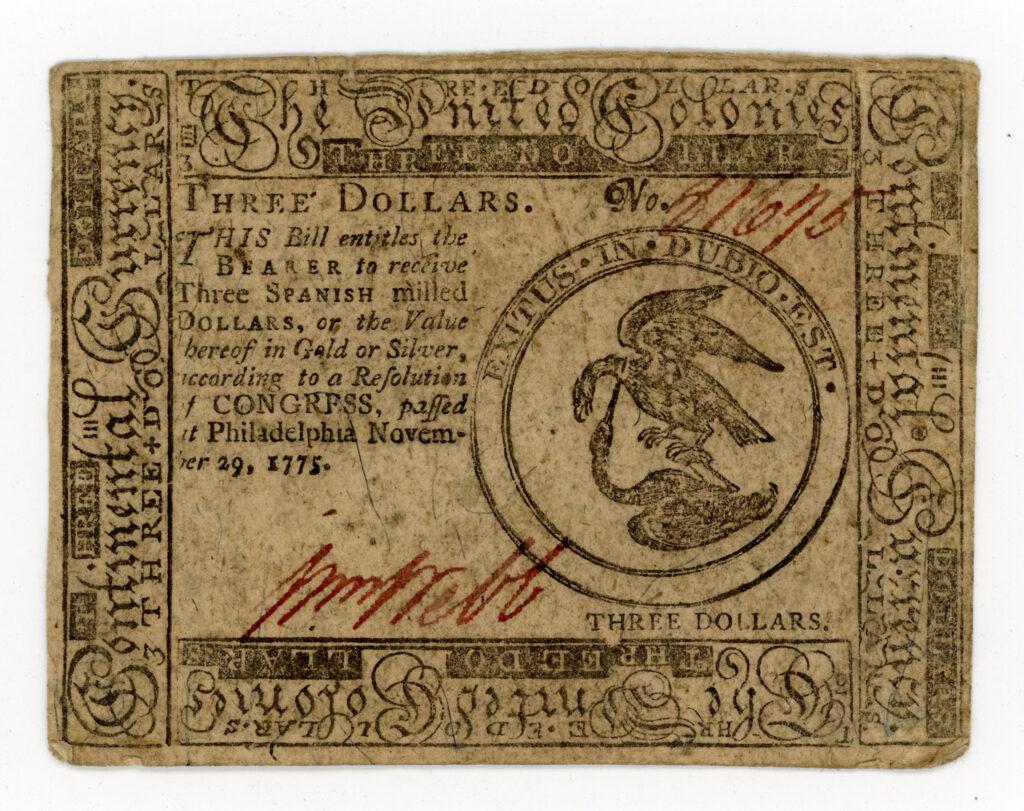
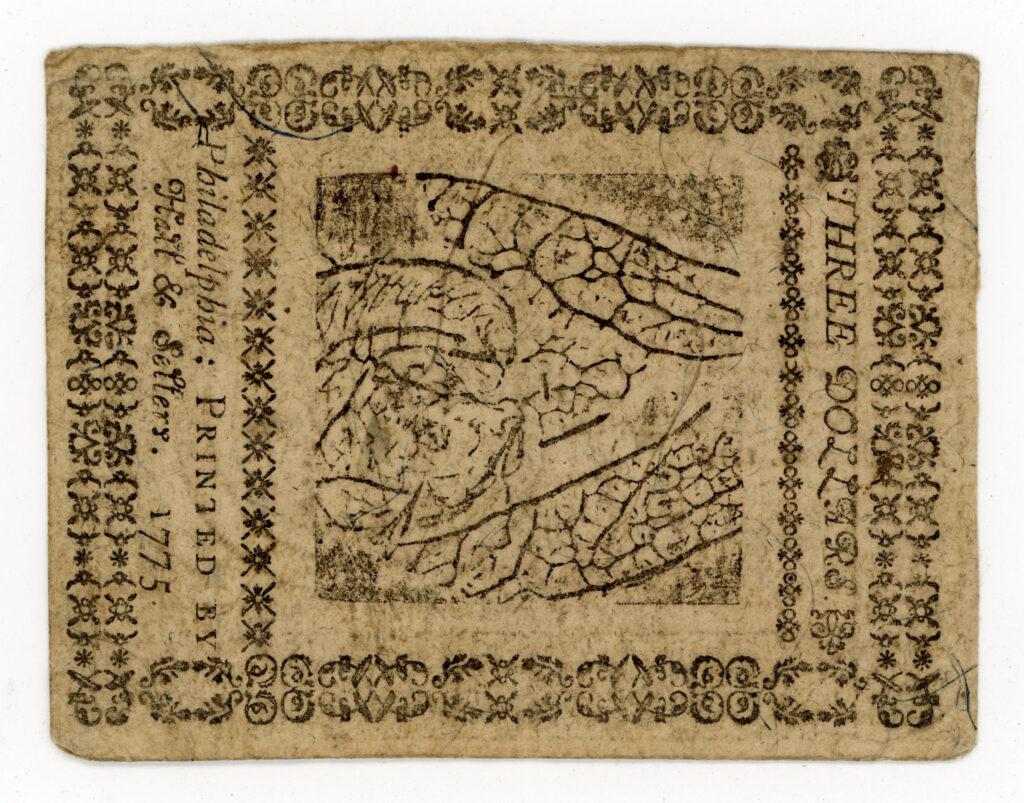
“Three Dollars, Continental Currency” November 29, 1775. Seaman’s Bank for Savings Collection 1991.072.0312.
The Three Dollars note offers a vivid example of balance between repetition and distinction. On the recto (front), the bill dramatically depicts an eagle and a heron locked in combat. With the Latin phrase “EXITUS IN DUBIO EST” (“the outcome is in doubt”), the emblem leaps to life, visually expressing the uncertainty at the heart of the Revolutionary moment. The future feels unresolved. The struggle persists. The outcome hangs in the balance. In this way, the image conveys the currency’s own precariousness. The note’s value, like the war, hinged on an outcome yet to be decided. When you look closely, the handwritten serial number and signature blur the line between printed and manual work. They subtly remind us that Continental Currency was a hybrid object, authenticated by both press and hand.
Turn to the verso (back), and more of the note is revealed. Here, a nature print, in this case a skeletal elm leaf and maple fruit, spreads across the surface. Real natural forms are nearly impossible to fake, so every note carries a bit of evidence straight from the world outside. On the verso, you see how creativity could outsmart crime, and how each bill was both art and artifact in the struggle for trust.
The botanical image additionally reinforces the note’s visual complexity, surrounding the central impression with another layer of ornamental and material specificity.
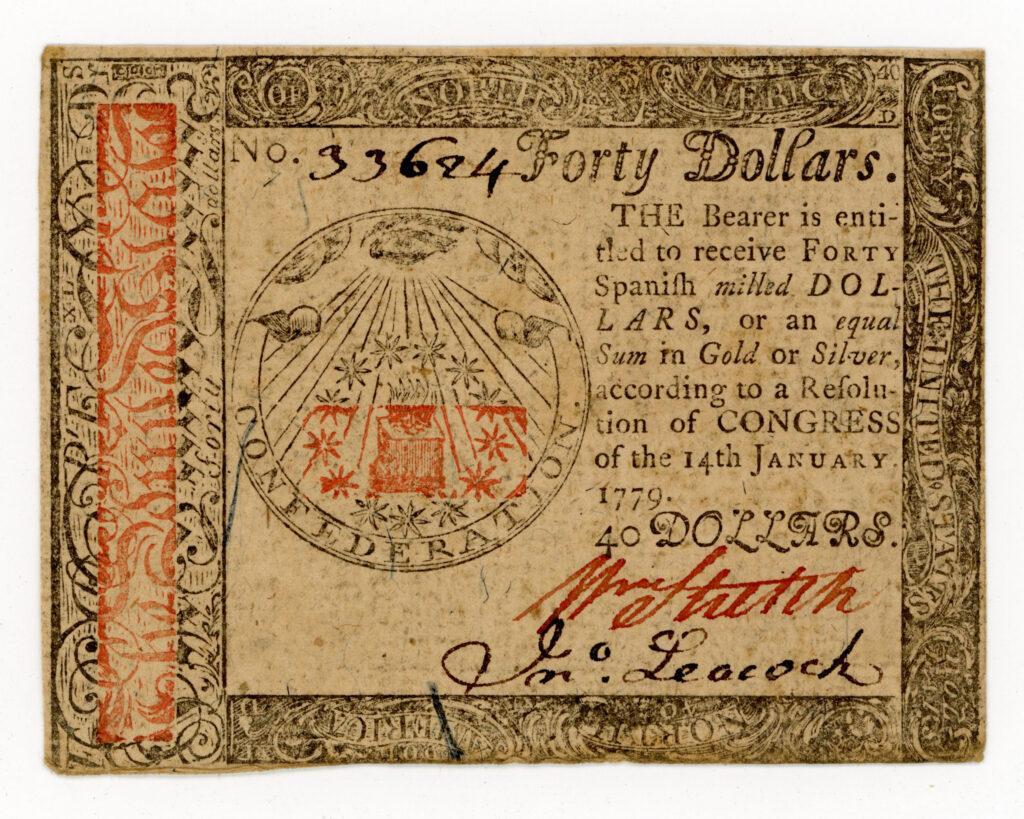
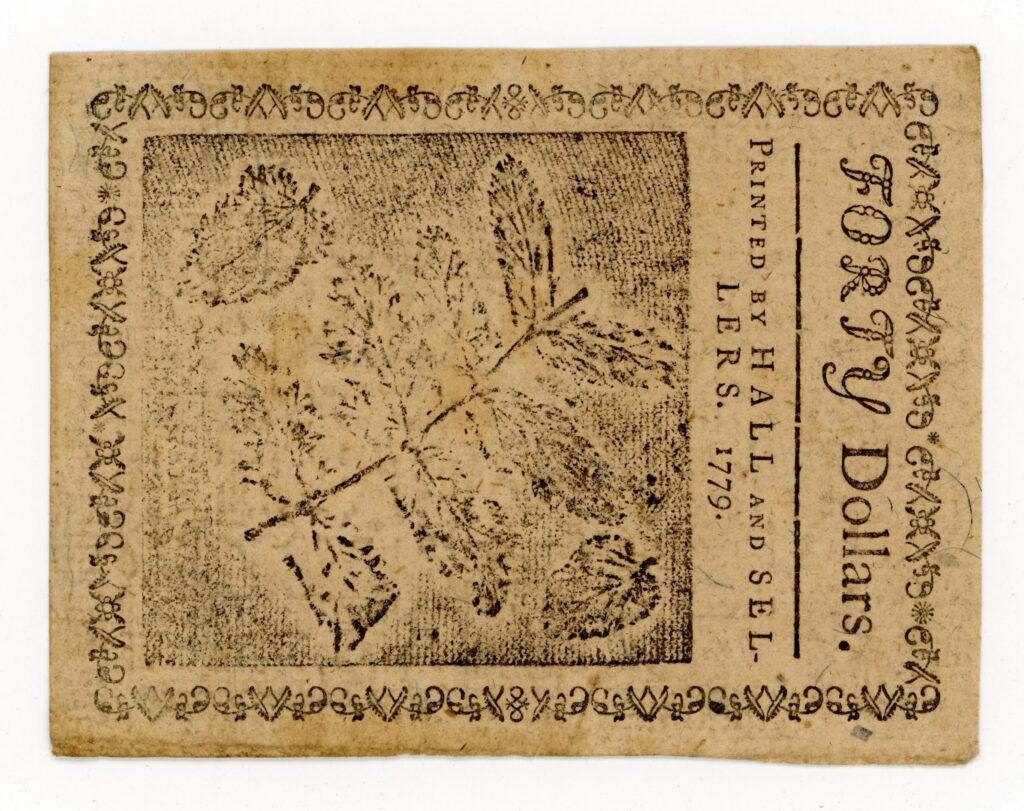
“Forty Dollars, Continental Currency” January 14, 1779. Seaman’s Bank for Savings Collection 1991.072.0440
The Forty Dollars note from January 14, 1779, is especially rich in imagery, and that visual density helps explain why Continental Currency was so much more than a simple medium of exchange. On the recto, the central emblem is built around an eye radiating beams of light in a pyramid-like form, with stars arranged around a small, altar-like base containing a flame. Surrounded by the word “CONFEDERATION,” the image appears both ceremonial and alert. The eye suggests watchfulness and oversight, while the rays give the design a sense of revelation or illumination, as if authority is being made visible. The stars reinforce a collective political identity, and the flame at the center gives the emblem a feeling of energy and endurance. Printed in both black and red ink, the note uses color to improve its authority, creating a surface that is visually layered and harder to imitate.
Taken together, these examples show that Continental Currency was doing more than facilitating exchange. It was teaching users how to recognize authority in print. The bills used ornaments as defense. They relied on the visual density of borders, emblems, signatures, and nature prints to create confidence in a material form that was always vulnerable to doubt. Every single note became a small but powerful statement about the Revolutionary era itself that independence had to be printed, circulated, and constantly believed into existence.
Seen in this context, these notes are part of the same print culture that produced broadsides, newspapers, pamphlets, and founding documents. Like those texts, they depended on design and distribution. Their survival today reminds us that the Revolution was printed into circulation through the everyday material forms people used. Money had to be legible, persuasive, and trusted, which meant it participated in the same visual and rhetorical world as the era’s political texts.
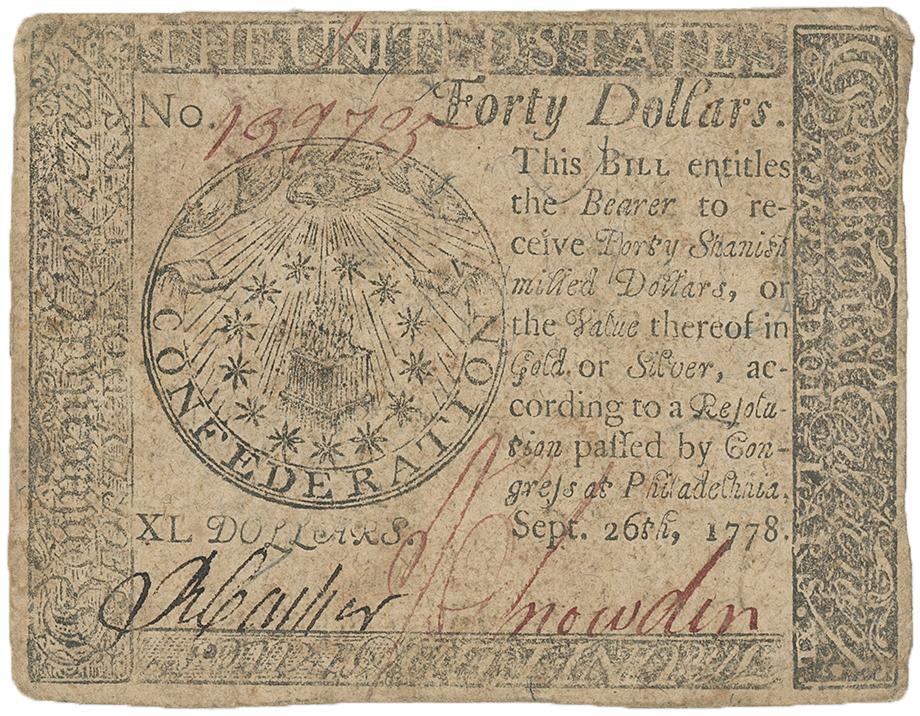
One of the most interesting things about Continental Currency is how familiar its logic still feels. The notes may look very different from contemporary American currency, but they share the same basic goal to make paper seem stable, official, and trustworthy through design. Continental Currency was often more emblematic and symbolic; its images could be allegorical, moral, or political, turning the bill into a miniature argument about the Revolution itself. Contemporary American currency, by contrast, tends to be more restrained and bureaucratic in appearance, but some traces of the first designs remain.
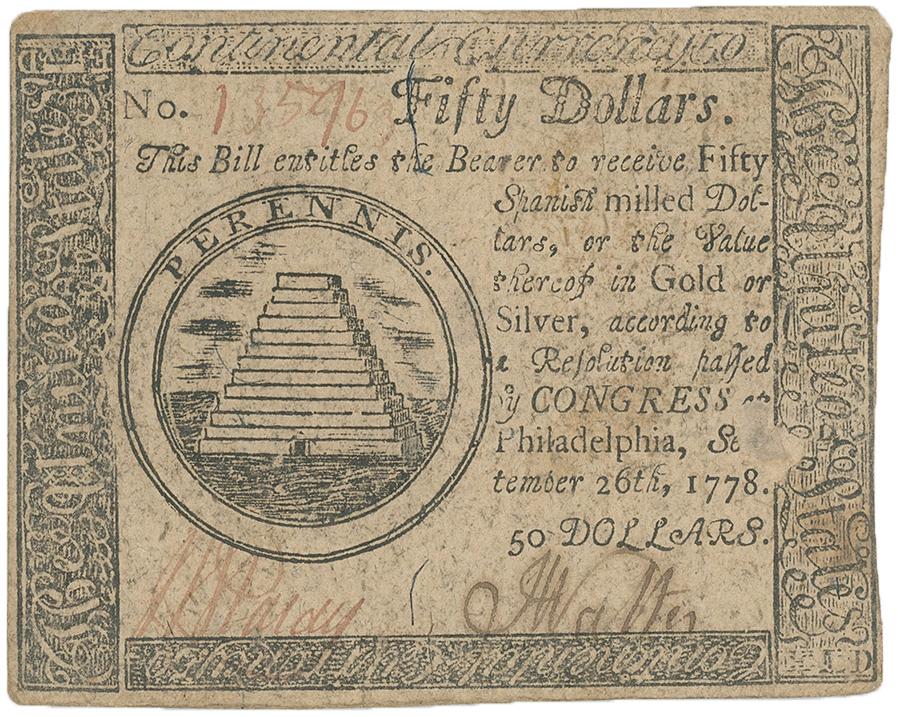
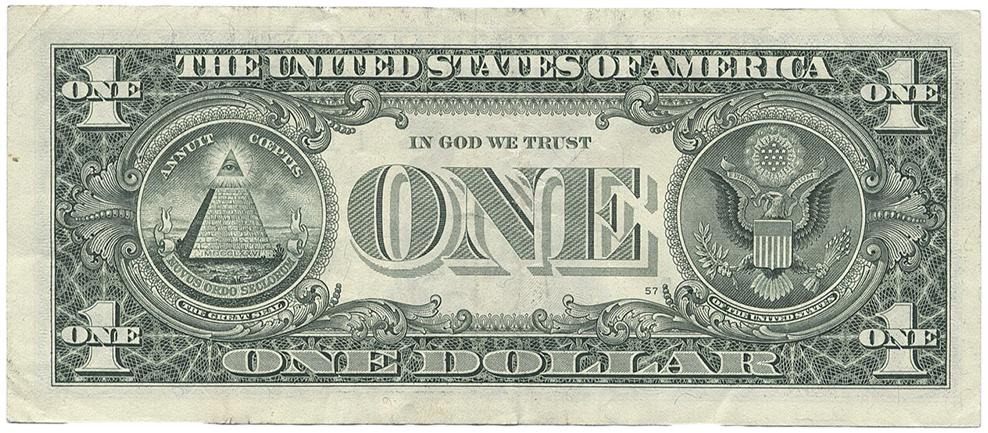
Top Left: “Fifty Dollars, Continental Currency” September 26, 1778. Seaman’s Bank for Savings Collection 1991.072.0424
Top Right: “Forty Dollars, Continental Currency” September 26, 1778. Seaman’s Bank for Savings Collection 1991.072.0418
Continental Currency makes visible a basic truth about the Revolutionary era: independence was declared through material production. These notes were meant to traverse a world of uncertainty, where general trust had to be repeatedly earned through design and print. Their borders, emblems, signatures, and nature prints were strategies for making paper believable at a moment when belief itself was unstable.
Seen in the context of our exhibition, these bills help illustrate how closely the nation’s history is tied to the history of print. They tell us that the Revolution depended on visual and material forms that carried authority into everyday life. Continental Currency may have depreciated, but as an object, it remains powerful evidence of the ingenuity, anxiety, and aspiration that formed early America. In its fragile surface, we can still see the effort to make a new nation legible, credible, and worth believing in.
Additional Readings and Resources
Newman, Eric P. (1967). The Early Paper Money of America. CDN Publishing. https://archive.org/details/earlypapermoneyo2008eric/mode/2up
Newman, Eric P. and Richard G. Doty. (1976) Studies on Money in Early America. American Numismatic Society. https://nnp.wustl.edu/library/book/512398
Ferguson, E. James. (1961). The Power of the Purse: A History of American Public Finance, 1776-1790. University of North Carolina Press. https://libsysdigi.library.illinois.edu/oca/Books2009-06/powerofpursehist00ferg/powerofpursehist00ferg.pdf