

Discovering a 19th Century Artist Through Sketches of Santo Domingo
A Collections Chronicles Blog
by Kait MacIntyre, Archives Program Volunteer
November 12, 2026
It has been over two years since the Transcription Project was launched with volunteers in the Museum Archives Program. Since Fall 2024, my fellow volunteers and I have transcribed more than 380 historical documents, including correspondence, manuscripts, invoices, and scrapbooks. This tremendous effort, carried out by passionate people from diverse backgrounds, has made the Museum’s collections and archives more searchable and accessible to both Seaport Museum staff and external researchers.
A notable example is the transcription of the Account Book of Capt. William Lake and his son Daniel Lake, 1775–1836. The transcription was made available to the curators and visitors of the exhibition The Occupied City. New York and the American Revolution at the Museum of the City of New York, where the manuscript is currently on loan.
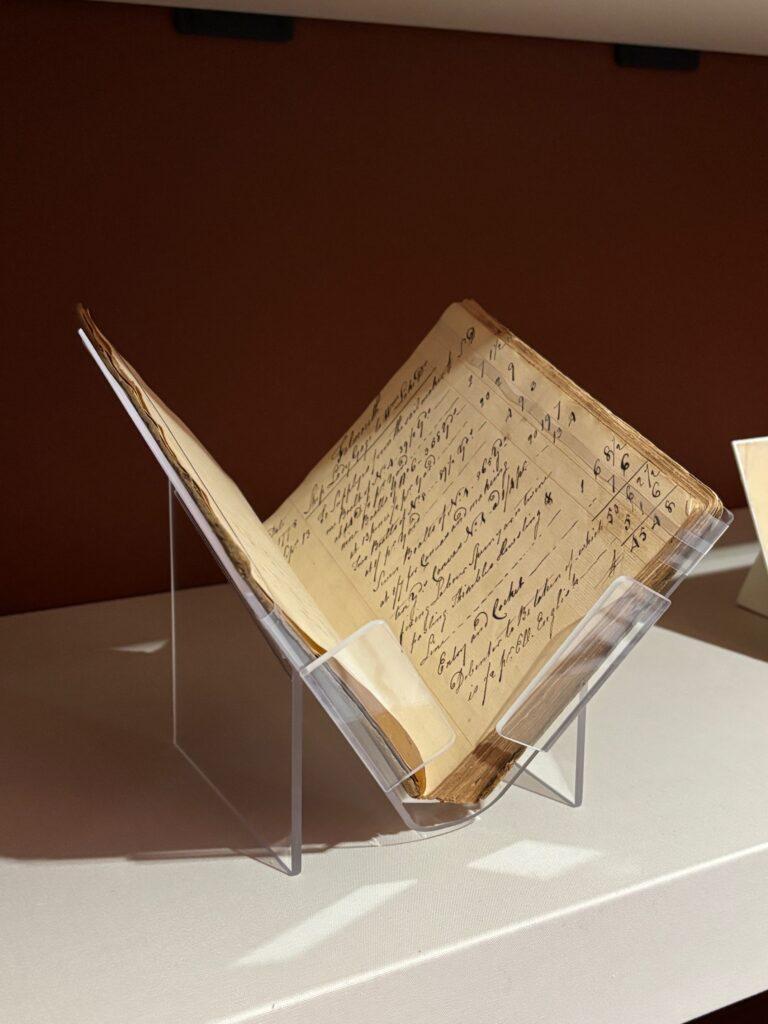
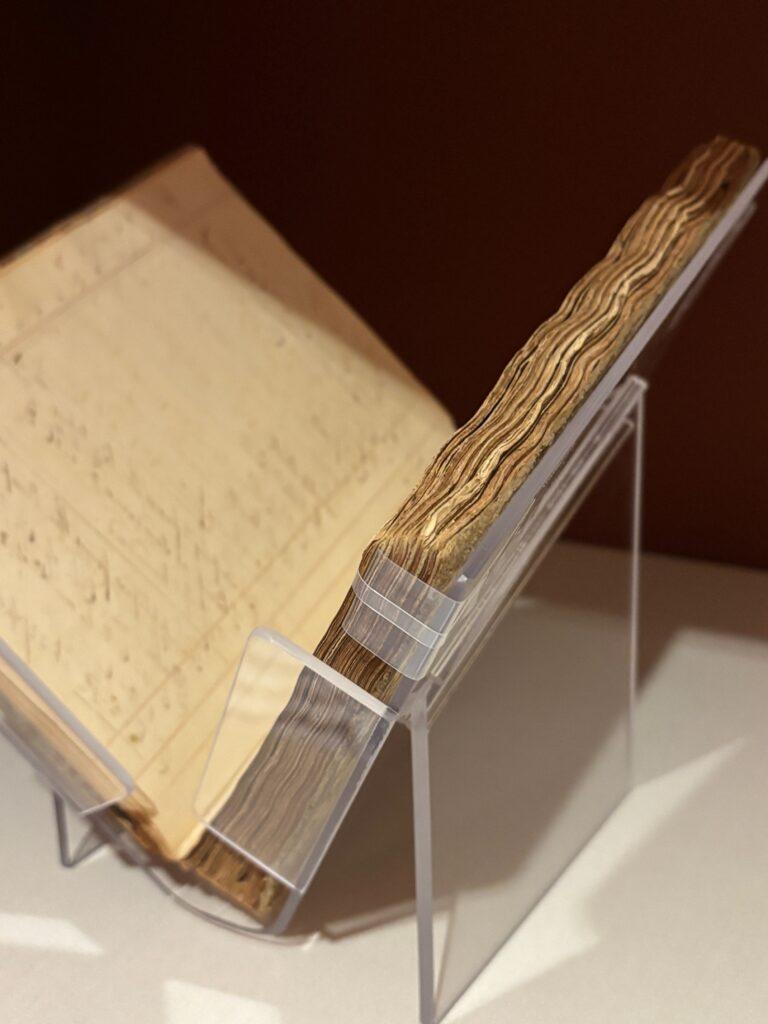
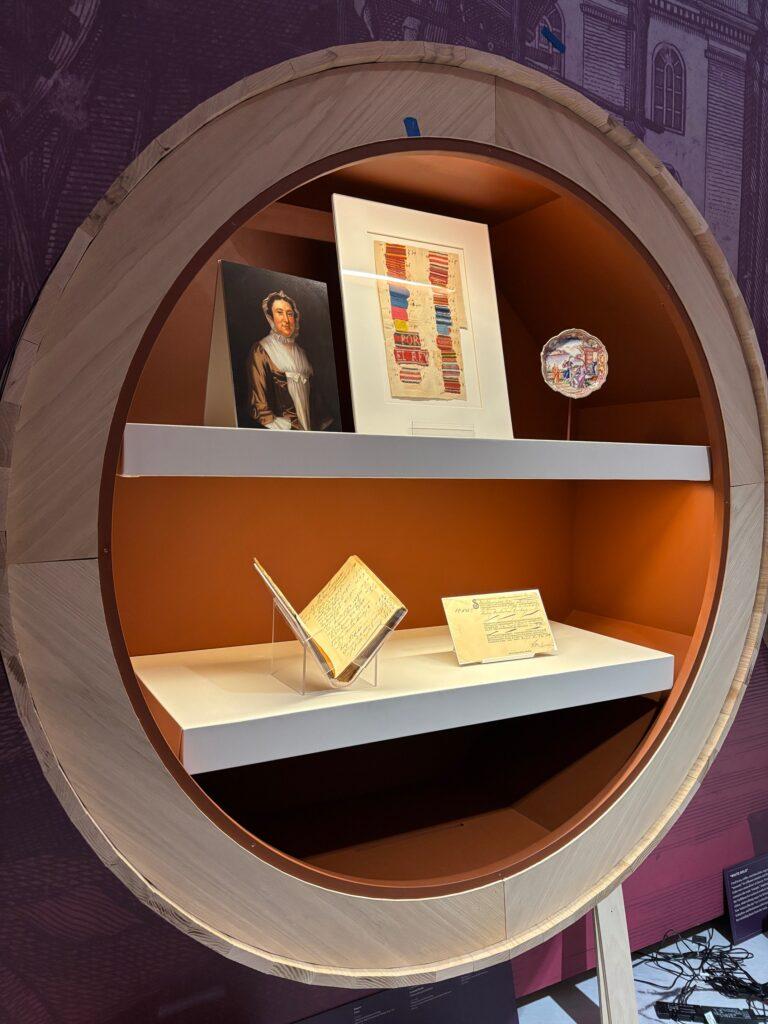
Transcriptions have made a great impact on the understanding of the archival collections, and often leave a personal mark on those who transcribes them. For me, this is the case for Sketches of Santo Domingo, which is an 1836–1837 manuscript that has captivated me over the the past year.
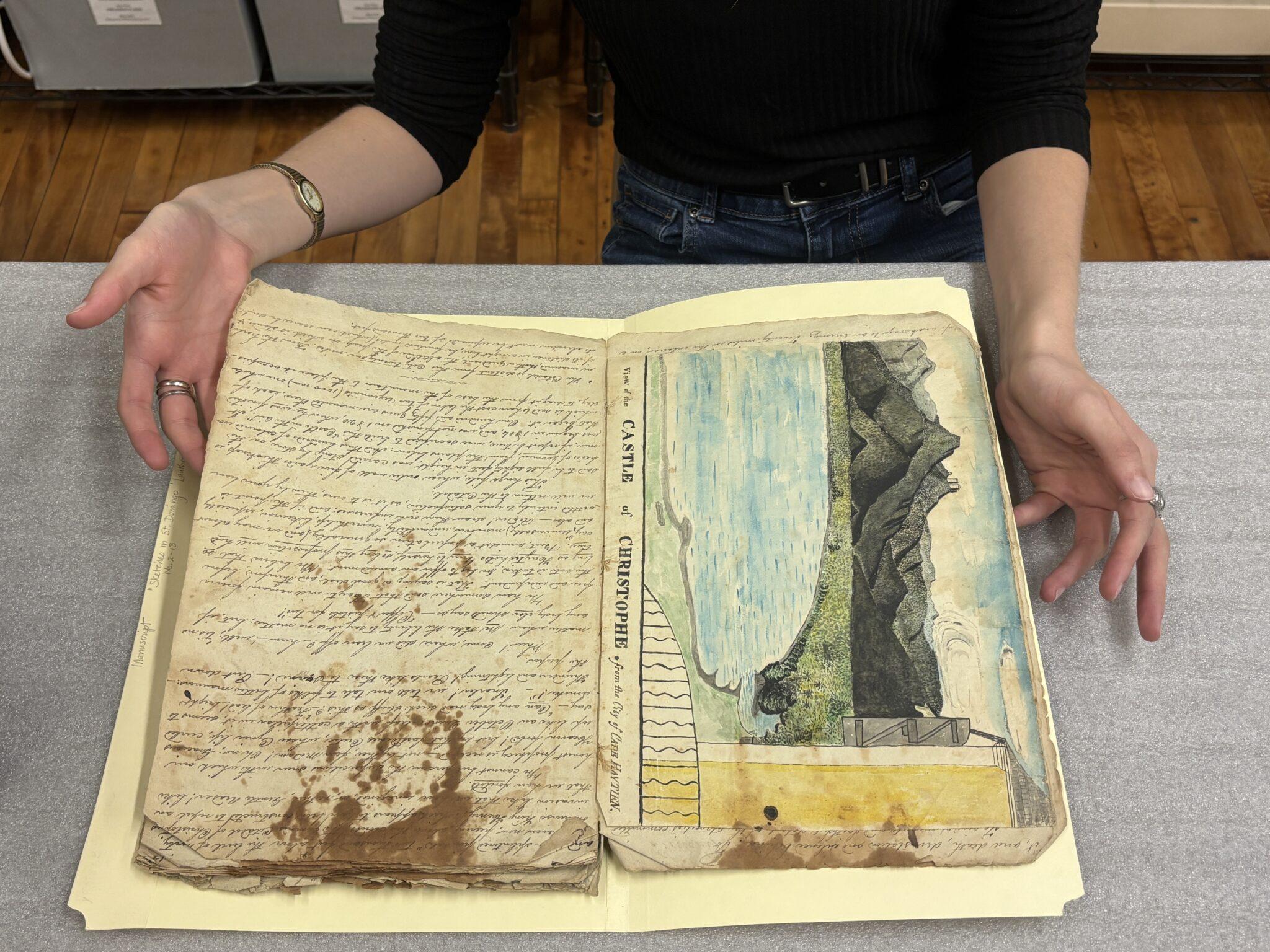
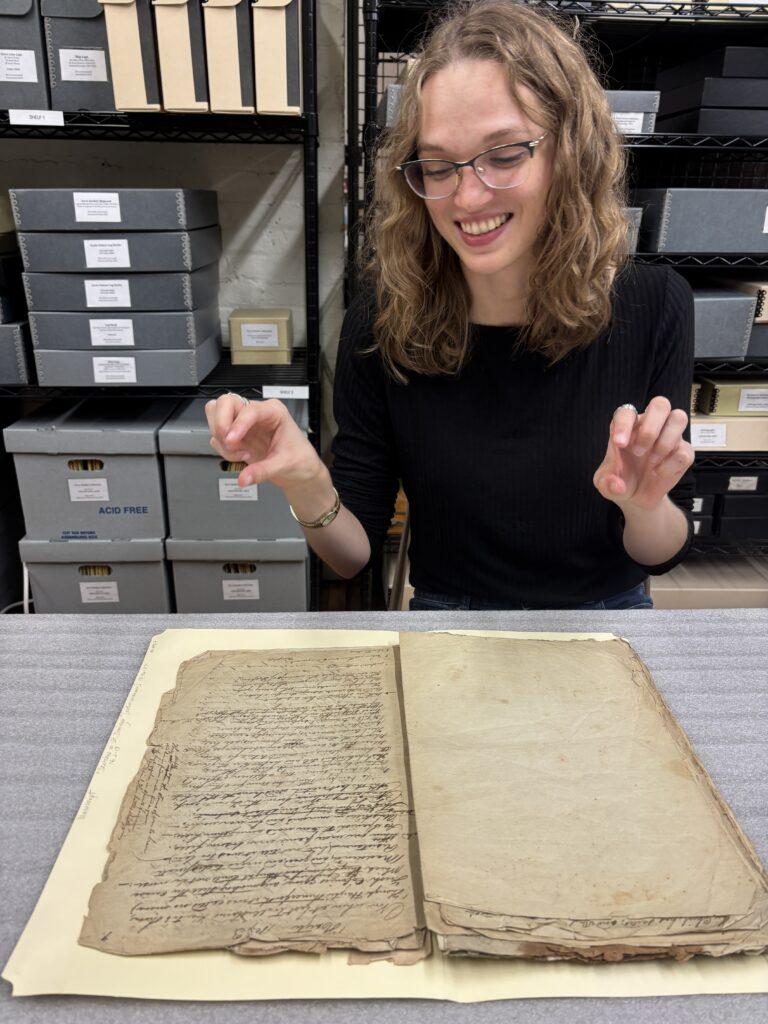
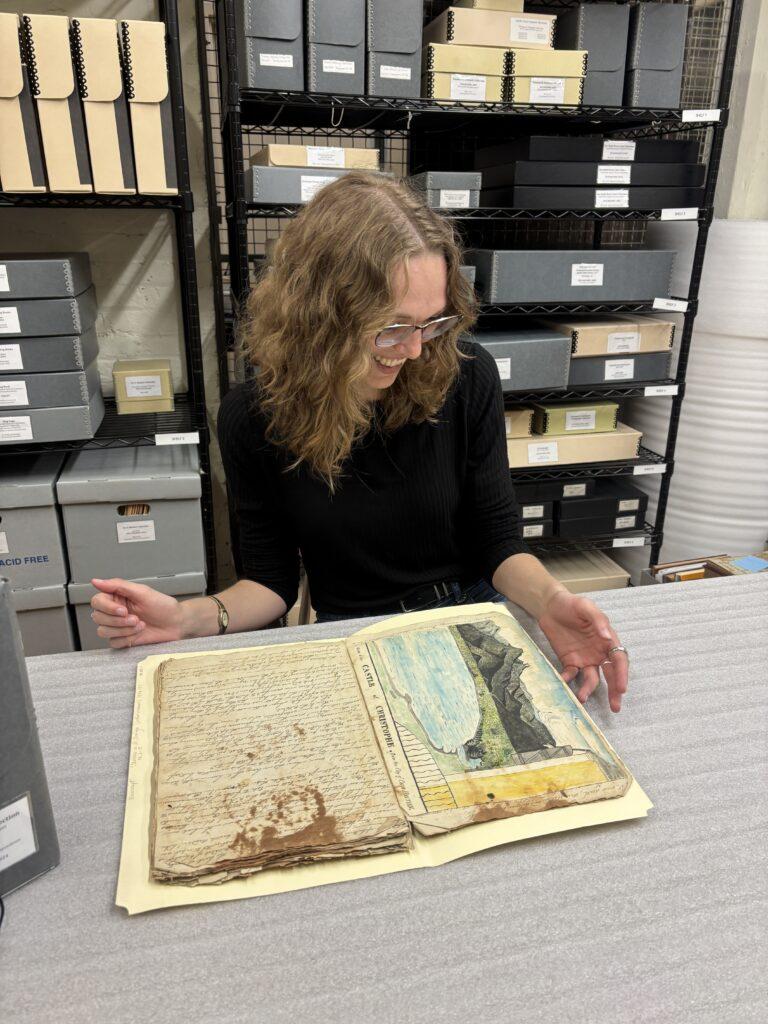
Sketches of Santo Domingo[1]The author uses “Santo Domingo” to refer to the entire island of Hispaniola, which is divided into Haiti and the Dominican Republic (then called Santo Domingo).consists of 74 pages, bound together without a cover. Interspersed with the handwritten, cursive text, are beautiful illustrations of Haiti in watercolor or black ink.
But who penned this account? And for what purpose? These are just some of the questions I sought to answer as I transcribed the manuscript.
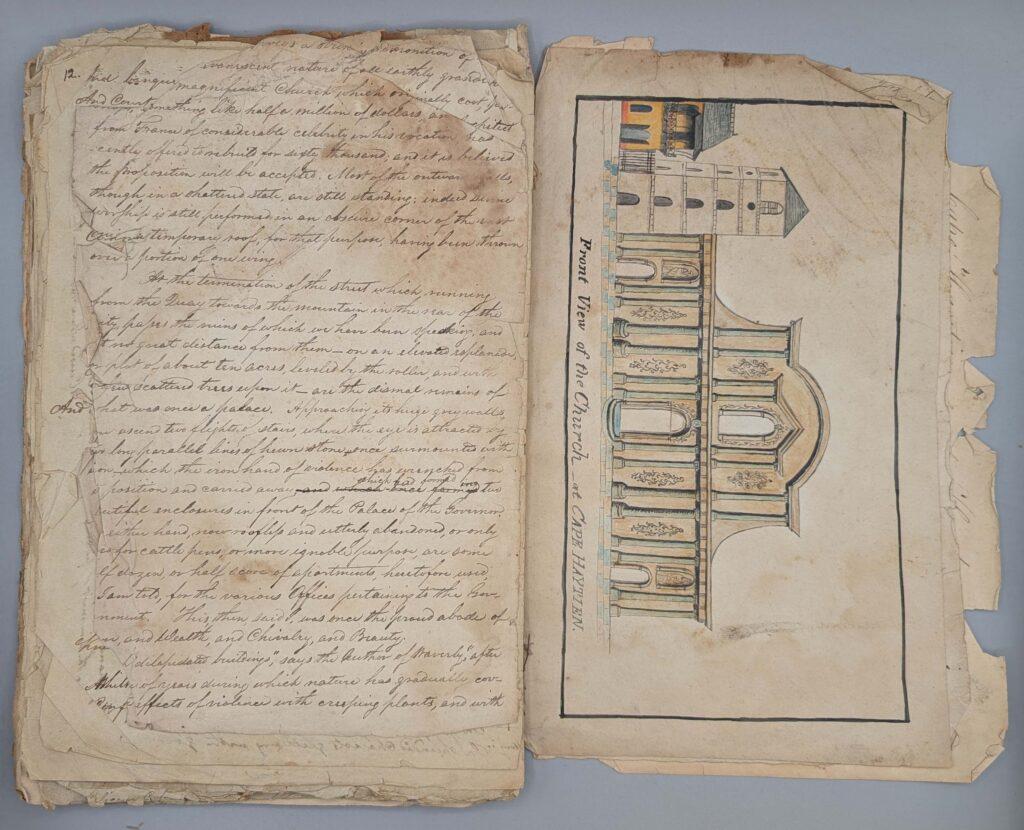
A Transformative Experience
I started volunteering at the South Street Seaport Museum after moving into an apartment by myself. Almost everyone I knew in the city had moved away, and I realized I needed something—anything—to get me out of the apartment on weekends. Before Nick Lockyer, the Volunteer Coordinator at the time, gave me my first tour, I knew absolutely nothing about New York’s maritime history or ships. Everything I know now, I’ve learned through osmosis.
I’ve come to associate the Volunteer Program so strongly with learning, exploration, and the effort to connect with the people and experiences of the past. Coupled with the kind and impressively smart people who make up the program, I think I was doomed to become attached to Sketches in Santo Domingo no matter what.
This isn’t the first time that volunteering has sent me down an unexpected path. I became fascinated with Walt Whitman after reading a Seaport Magazine[2]Since its founding in 1967 and until 2010, the South Street Seaport Museum published its own magazine, titled South Street Seaport Reporter (1967-Summer 1978) and then Seaport (Fall 1978–2010). issue dedicated to his life, and my newfound dream of working at a lighthouse came from another magazine. I’ve always treated volunteering as an opportunity to discover unfamiliar parts of the world, as well as new parts of the city. This project became another such journey, but with an added intensity: it occupied more than a year of my life.
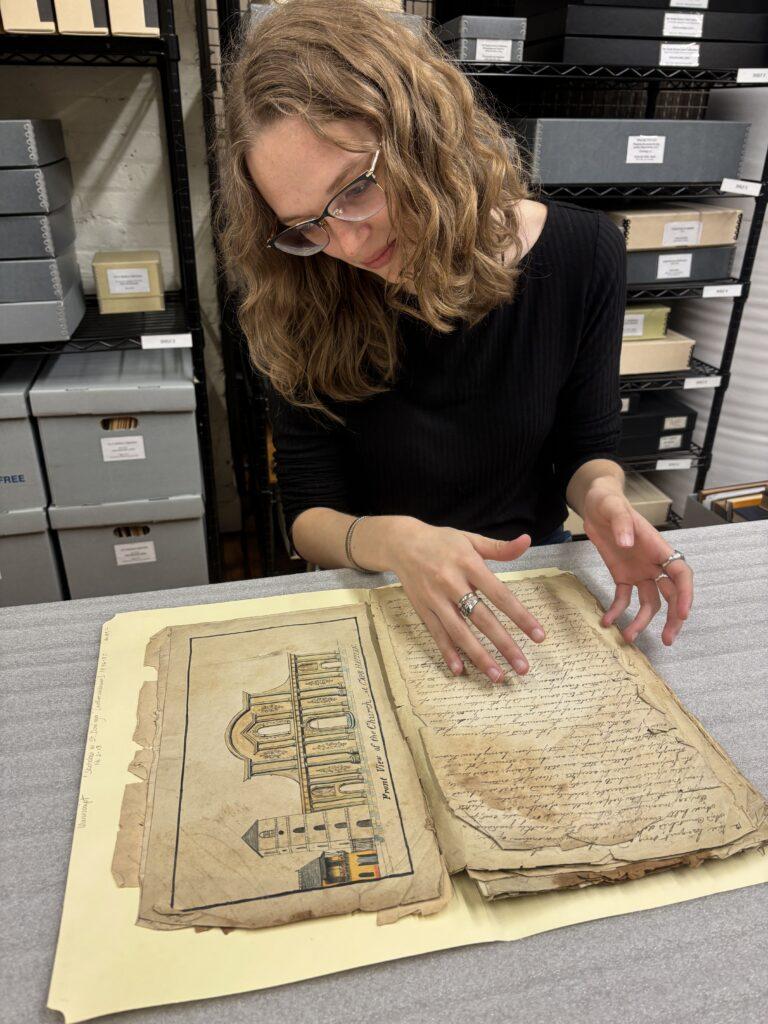
I spent a great deal of time with the manuscript and its author, not simply rewriting his words, but researching the people he mentioned, investigating the language he used, and imagining how he might have felt while he wrote.
The process involved an extraordinary amount of reflection, and the manuscript gradually became part of my everyday life. I jumped at every opportunity to talk about it.
I found myself genuinely curious about an artist in the 19th century: how he came to find himself in Haiti, how excited he was to be there, and how he approached the experience of exploring and learning about an unfamiliar place on his own, yet surrounded by other people. In many ways, I could relate his experience to my own life in New York.
I already read a lot; reading is perhaps one of the most consistent parts of my personality. But I had never read anything so deeply, to the point where it felt less like reading about a character and more like getting to know another human being. I think this came from a combination of the time I spent with the manuscript and the world I gradually constructed around its author. His thoughts and actions felt remarkably transparent on the page, and I found myself developing a sort of parasocial relationship with him.
That connection also became intertwined with my relationship to volunteering at the Seaport Museum. My affection for the program, the people I met through it, and the opportunities it gave me to learn and explore inevitably extended to the manuscript itself. Over time, I think some of that goodwill transferred to its author, too. What began as a way to get out of my apartment on the weekends became an unexpectedly intimate encounter with a person who lived centuries ago—and a reminder of how deeply engaging with history can transform the way we understand both the past and ourselves.
The Mysterious Author
I still haven’t been able to identify the author’s full name. A name appears toward the back of the book, but there’s no indication that it belongs to him.
While I identify the author as a man throughout this blog post, I don’t know the author’s gender for certain. I suspect the author is a man, based on his descriptions of women, which feel more detached, compared with his more personal and empathetic observations on men. His account of traveling through the island offers further clues: he never expresses concern about his safety as a solo traveler or reflects on clothing and appropriate attire. These omissions aren’t conclusive, but they reinforce my impression. His later observations on race also reveal a paternalistic outlook that complicates his earlier expressions of sympathy and understanding.
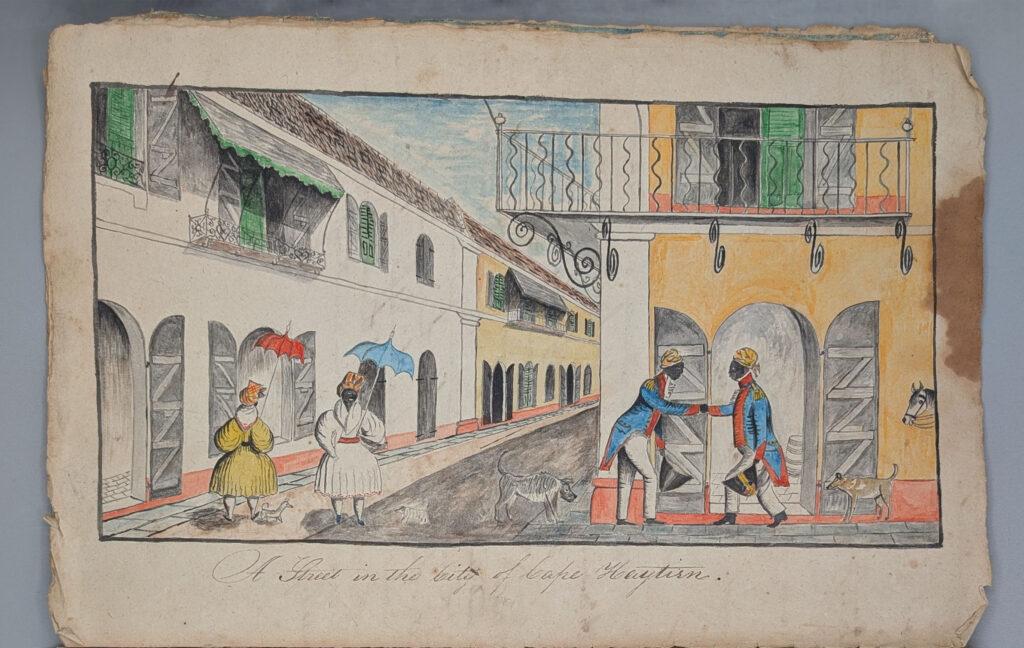
My impression of the author changed as I worked through the manuscript. The opening pages are surprisingly liberal for their time: he criticizes Christopher Columbus (1451–1506) for enslaving the Indigenous people of Hispaniola and reflects on freedom and the right to own what one produces. His vivid descriptions of the landscape, colors, and architecture also suggest an artistic, passionate, and perhaps rebellious personality.
As the account progresses, however, his attention shifts toward more anthropological observations, and his views of the Haitian people increasingly reflect the more typical racial assumptions of a white American man of the 19th century. It was fascinating, and at times disappointing, to watch his early openness give way to more conventional prejudices.
His writing also becomes more subdued toward the end. About halfway, he describes an earthquake, and I wondered whether the experience frightened him. It felt like a possible turning point, after which his enthusiasm seemed to fade. I can’t know whether the earthquake changed his outlook, but the shift in tone was difficult to ignore.
Without a confirmed identity, these evolving impressions became part of how I came to know the author. I could trace his contradictions and speculate about the experiences that shaped him, even if I could never fully separate the historical person from the one I had constructed through reading.
Impressions of the People of Haiti
I think the author’s impressions of the Haitian people are deeply colored by the racism of his time, which remains influential throughout his account. He frequently describes them as lazy and incapable of consistently maintaining a productive or safe society, often attributing these perceived shortcomings to indulgence in vice. His perspective is almost paternalistic, as though he believes these behaviors are inherent to the people themselves and that they require a guiding hand. He seems sympathetic toward them, but not truly empathetic. This distinction may also explain why some of his observations take on a tone of detached amusement rather than genuine understanding.
Recognizing this bias was one of the reasons I began looking for books on the Haitian Revolution (1791–1804). I wanted to find accounts that could offer a fuller understanding of the people, their culture, and the historical circumstances in which they lived, beyond the perspective of this particular author.
The author does, however, single out individuals whom he considers respectable, particularly military officials he perceives as industrious or morally upright. He seems to place a great deal of value on stoicism, temperance, and self-discipline, qualities he admires in these individuals but views as being at odds with what he considers the broader local culture. His praise, then, is often conditional: he respects those who conform to his own moral standards, while continuing to judge the wider population through the same assumptions that shape his account.
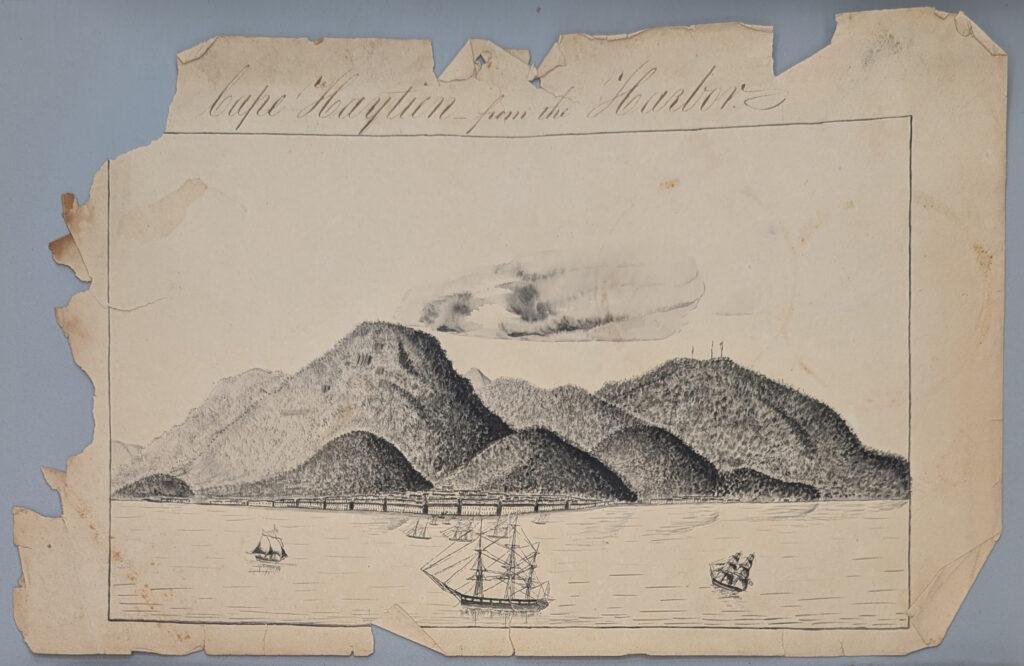
His impressions of Haiti as a place, by contrast, are often filled with admiration. He repeatedly describes the landscape as beautiful and seems genuinely awed by its natural abundance and potential. He sees a place capable of providing so much, with resources and opportunities that, in his view, remain unrealized.
The author places considerable value on industriousness, self-motivation, and the productive use of resources. I think much of his frustration stems from the perceived gap between what Haiti could be and what he believes it has become. His admiration for the land exists alongside his disapproval of its people, creating a tension that runs throughout the manuscript. He seems able to recognize Haiti’s beauty and potential while struggling to understand its people outside the prejudices and expectations he brings with him.
This contrast is one of the most revealing aspects of his account. His writing tells us not only how he viewed Haiti, but also how his own values and assumptions shaped what he was able to see. Reading his descriptions critically means looking beyond his judgments to consider the society he was observing, the history that informed it, and the perspectives his account leaves out.
Thoughts on Colonialism
I suspect the author is an American Southerner. Early in the manuscript, he uses an expression associated with North Carolina’s culture[3]”[…] they resort to the Hotels, Taverns and Drinking houses, and there, at Billiards, Cards, or Dice, wrangle with one another most boisterously over their outspread wager of “Une … Continue reading, and when discussing race relations in the United States, he seems to distinguish Northerners from his own social and cultural context. His use of “we” when referring to the United States also suggests that he identifies as American, although his precise background remains unconfirmed.
The author expresses a strong disdain for the roles France, Britain, and Spain play on the global stage. He views these powers as tyrannical, abusing their authority and failing to serve the people under their control, whether in Haiti or elsewhere. He frames this criticism through appeals to freedom, free will, and the right of people to govern themselves. At first glance, these convictions make him seem surprisingly progressive for his time.
However, his position becomes more complicated when he considers whether people can govern themselves in practice. He appears to reject outright colonialism but stops short of fully trusting Haitians to determine their own future. This is where his racism and imperialism intersect. He seems to believe that America could provide a necessary “guiding hand,” teaching Haitians to live according to what he considers just and proper moral values. Once again, his paternalism emerges: he advocates freedom in principle while reserving for his own culture the authority to define what that freedom should look like.
The author is clearly proud of his cultural background and upbringing. I also suspect he is something of a traditionalist, more influenced by British ideals than he might care to admit. His criticism of European colonial powers does not necessarily mean he rejects the hierarchies underpinning their imperial ambitions. Instead, he seems to distinguish between European abuses of power and what he imagines would be the more benevolent influence of America.
To me, this is the central contradiction in his political outlook. He opposes colonialism while remaining comfortable with the idea that one society should guide another toward what it considers a more civilized way of life. In that sense, his thinking seems more imperialist than explicitly colonial: he questions who should wield power more than the assumption that some nations should direct others. His writing reveals how easily a belief in freedom can coexist with the conviction that others are not yet ready to exercise it themselves.
The Haitian Revolution and Its Protagonists
When discussing the Haitian Revolution (1791–1804), the author seems to simultaneously overlook it and respect it. He values its ideals and appears to admire the effort to break free from France, Britain, and other foreign powers. However, he focuses far more on these ideals than on the Revolution itself. When he does reference it, he does so through individuals: former rebels and their military service, current officials, and prominent figures who have since died. Rather than treating the Haitian Revolution as a broader political and social movement, he approaches it through the people who participated in it. This reflects a larger tendency in his writing to understand history through individuals rather than major events.
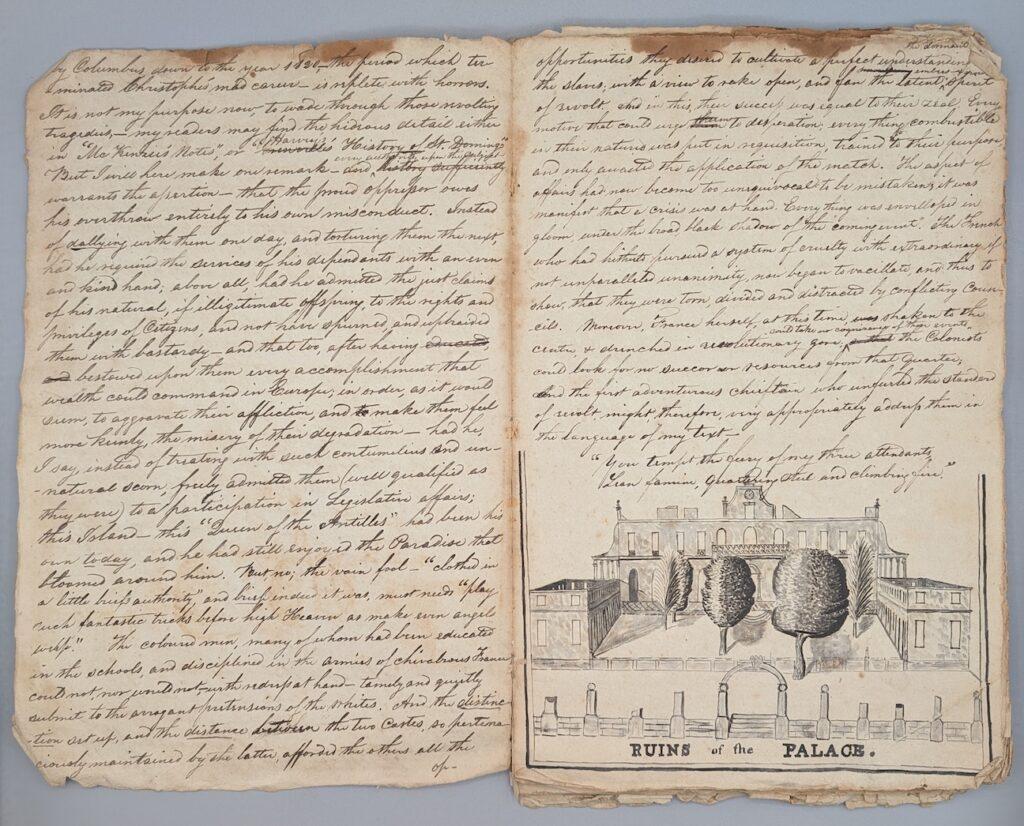
The author never expresses an outright opinion on the Revolution, though his writing suggests that he sympathizes with it and supports its ideals. However, his support for liberation does not necessarily extend to Haiti’s full independence or its ability to govern itself without outside guidance. This contradiction echoes his broader views on colonialism and imperialism: he values freedom from foreign control but remains uncertain that Haitians can exercise that freedom independently. I also suspect his strong dislike of France plays a role in his position; he seems inclined to support anything that challenges French power, even if his own beliefs about Haitian self-governance remain conflicted.
Shakespeare and Other Poets
I think our author is an artist who uses his account to record his observations and make sense of his experiences and feelings, while remaining conscious that someone else will eventually read his words. He directly addresses the reader several times, suggesting an awareness that he will be judged by what he writes.
He dedicates entire sections of the book to poetry, drawing on Shakespeare, other poets, and several unidentifiable poems. I suspect these references serve as much to shape his own self-image as to communicate with his audience. They allow him to present himself as an artist and add an intellectual edge to his writing, while connecting with readers through familiar cultural references. In a way, it reminds me of how my generation references a TikTok sound as a signal that we are “in the know” and understand the context behind it.
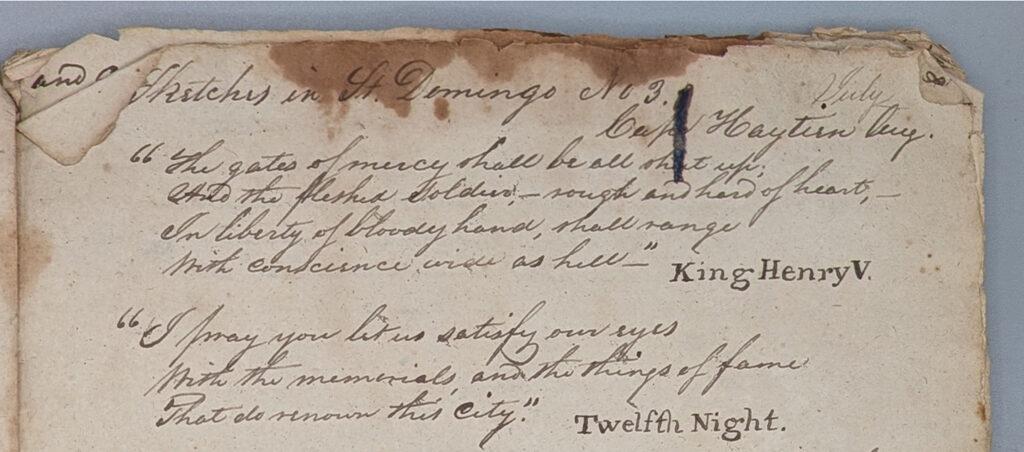
Shakespeare is the poet most frequently quoted, particularly Henry V, although his prominence may simply reflect how familiar and culturally significant his work was at the time. I found it fascinating to observe which passages the author copied exactly and which ones he altered, sometimes changing a single word and other times rewriting an entire line. He seems remarkably intentional about his language, frequently crossing out words in favor of alternatives even when the change doesn’t significantly alter the meaning. This attention to wording makes his use of poetry all the more interesting.
I do have one conspiracy theory about the lengthy anonymous poem in the manuscript, which might also explain the prominence of poetry throughout the book and Shakespeare in particular. The author claims to have discovered the poem in his desk, left behind by a previous occupant, and spends two pages discussing his right to publish it. I suspect he may have written it himself.
My theory is that our sketch artist was also a poet, but perhaps too shy to share his work or unable to get it published. He may have used quotes from his literary heroes to establish poetry as part of the book, before introducing a poem of his own. The extended discussion of his right to publish someone else’s work feels unusually elaborate if the story is entirely true. Of course, I have no proof, but the circumstances leave me wondering whether this anonymous poem was his attempt to share his own writing while hiding behind someone else’s work.
Highlights
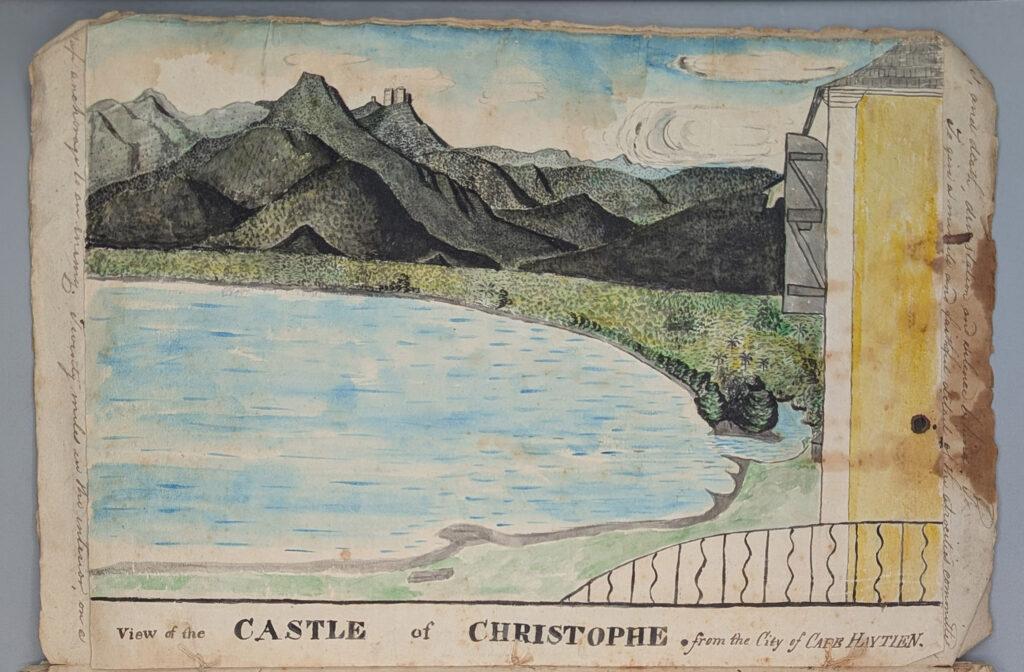
One of the sections I love most is when the author is exploring the ruins of Christophe’s Castle (today’s Citadelle Henry). I remember the first time I read it, the way he described the architecture and the busts in the water, the way the vegetation was falling, and how I could imagine the sunlight streaming through. There was a sense of awe and quiet about that scene that I could so vividly picture, and I think about it quite a lot, what it would have been like to stand in those ruins and see that.
“The garden is
a dead level not more than six feet above high water mark,
forty or fifty or perhaps sixty rods long, and from Two, to Ten or
a dozen rods in width, with a palace, or what was once a
palace, at each end. This fertile spot, now overgrown with
briers [briars], and weeds, and long rank grass, we waded and zigzaged [zigzagged]
through with no little difficulty; frequently encountering
amid the brambles, reservoirs of water, where the dark damsels
of the harem, secure from intrusion, were wont to bathe; whilst
glittering Goldfish mid the sparkling element, played round
the polished Ebony. Pedestals for Busts or Statues, arbours [arbors],
alcoves and arched gateways in massive stone work, were
found in every direction embowered beneath the dark Mango
or the Cocoanut; whilst the Orange tree, the Citron, the Date,
the Fig, the Cotton, the Grapevine and thousands of flowering
shrubs unknown to me, — springing up in spontaneous redundence [redundancy]
— claimed our regard only by impeding our progress.”
As for quotes, “Coffee & Pistols for Two” might be my favorite expression. The first time I read it, I sat there and giggled for a solid minute.
“We take the liberty to say it is no matter; but, if
any body [anybody] else should say so ‘Coffee & [and] pistols for two’!”
This is something the author says after laying out his grievances with Christopher Columbus, and directed at the reader if they disagree with him! I read it as: you can sit down to talk (the coffee) but are ready to stand your ground on what you said, even if it causes disagreement (the pistols, a duel). A little like a fancy way of saying “this is a hill I’ll die on” or an opinion/belief you hold onto fiercely. The author was just so convinced of his thoughts on Christopher Columbus, and made it very clear that he didn’t care if someone disagreed with him, he was more than ready to duke it out!
Transcription Process and Opportunities
There were many challenges in transcribing the manuscript, and I say that with fondness, because the process often felt like solving a puzzle. Here are the ones I encountered most frequently.
Handwriting
The author’s handwriting is beautifully cursive, but when he gets passionate, it becomes considerably messier. His neat, flowing script suddenly turns into a sea of loops and tiny letters, making it difficult to decipher a word even when 90% of the letters are legible. I didn’t even know it was possible to recognize almost an entire word and still have no idea what it was because of one small, illegible letter in the middle.
Overwriting and Cross-outs
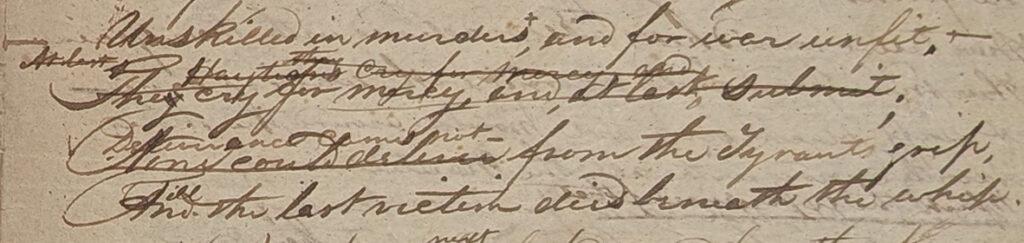
During my first pass at the transcription, there were entire sections I didn’t even attempt to decipher right away. Instead, I wrote “Train Wreck,” highlighted it in yellow, and kept going. The author would cross out an original line, write a replacement above it, cross that out, and then squeeze a new version in even tinier handwriting above both. He did this several times, and on the days I knew I was approaching one of these sections, I would order an extra-large coffee.

Dashes
The author uses an extraordinary number of dashes and hyphens. Because everything is handwritten, I could never quite tell whether a line was grammatically intentional or simply a stylistic flourish. Special characters quickly became my best friends.
Names
The author moves through a world full of people, naming individuals whose identities and spellings weren’t always easy to determine through his cursive. This challenge was more fun than frustrating, since many of the people he mentions were historical figures like Vincent Ogé (ca. 1755–1791), Étienne Magny (ca. 1765–1827), and Jean-Pierre Boyer (1776–1850). I ended up getting a history lesson while checking his spelling, which is where I began accumulating so many transcription notes.
Rabbit Holes
Honestly, my biggest struggle was stopping myself from going down rabbit holes. I wanted to make progress on the transcription, but I love learning. Whenever I encountered a poetry quotation, an unfamiliar name, a metaphor, or a word I didn’t recognize, I wanted to look it up. One discovery would lead to another, and before long, I’d spent far more time researching than transcribing.
These detours gave me an incredible amount of context about the author’s world and his personality, but they also made it difficult to find a balance between research and the task at hand. Still, I wouldn’t trade that knowledge for anything.
Beyond the Transcription
I love to read, and when I do, I build a mental map of how each book connects to others I’ve read: through shared genres, recurring ideas, literary references, or similar characters. I started doing the same thing with this manuscript.
Transcribing it has inspired me to seek out historical nonfiction about Haiti, return to sketching myself, and think more carefully about the authors whose work I read. Rather than seeing an author as a figure in the background who simply wrote the book, I’ve begun to think of them as an active participant in how a story takes shape, influenced by their experiences, interests, and the world around them.
Additional Readings and Resources
Cursive Conundrums. Spotlight on Museum Archives Program Volunteers Helping with Transcription, by Elena Abou Mrad and Nick Lockyer, Collections Chronicles Blog, South Street Seaport Museum, November 14, 2024.
Mapping the Haitian Revolution, by Stephanie Curci and Chris Jones (Tang Institute, Phillips Academy).
University of Oxford, Bodleian Libraries Blog, Archives and Manuscripts: Features insights, updates, and crowd-sourcing pilot project reviews regarding historical manuscripts and digital archives.
A Beginner’s Guide to Transcribing Our Archives, Newberry Library Blog & Archives: Offers a beginner-friendly walkthrough on how to use their digital image viewer and text tools to transcribe historical letters and diaries.
References
| ↑1 | The author uses “Santo Domingo” to refer to the entire island of Hispaniola, which is divided into Haiti and the Dominican Republic (then called Santo Domingo). |
|---|---|
| ↑2 | Since its founding in 1967 and until 2010, the South Street Seaport Museum published its own magazine, titled South Street Seaport Reporter (1967-Summer 1978) and then Seaport (Fall 1978–2010). |
| ↑3 | ”[…] they resort to the Hotels, Taverns and Drinking houses, and there, at Billiards, Cards, or Dice, wrangle with one another most boisterously over their outspread wager of “Une Gourde” or “Deux Gourdes”—a filthy tattered scrap of printed paper, for all the world, just like an old fashioned North Carolina ‘soft sixpence’.” Sketches of Santo Domingo, page 15. |