

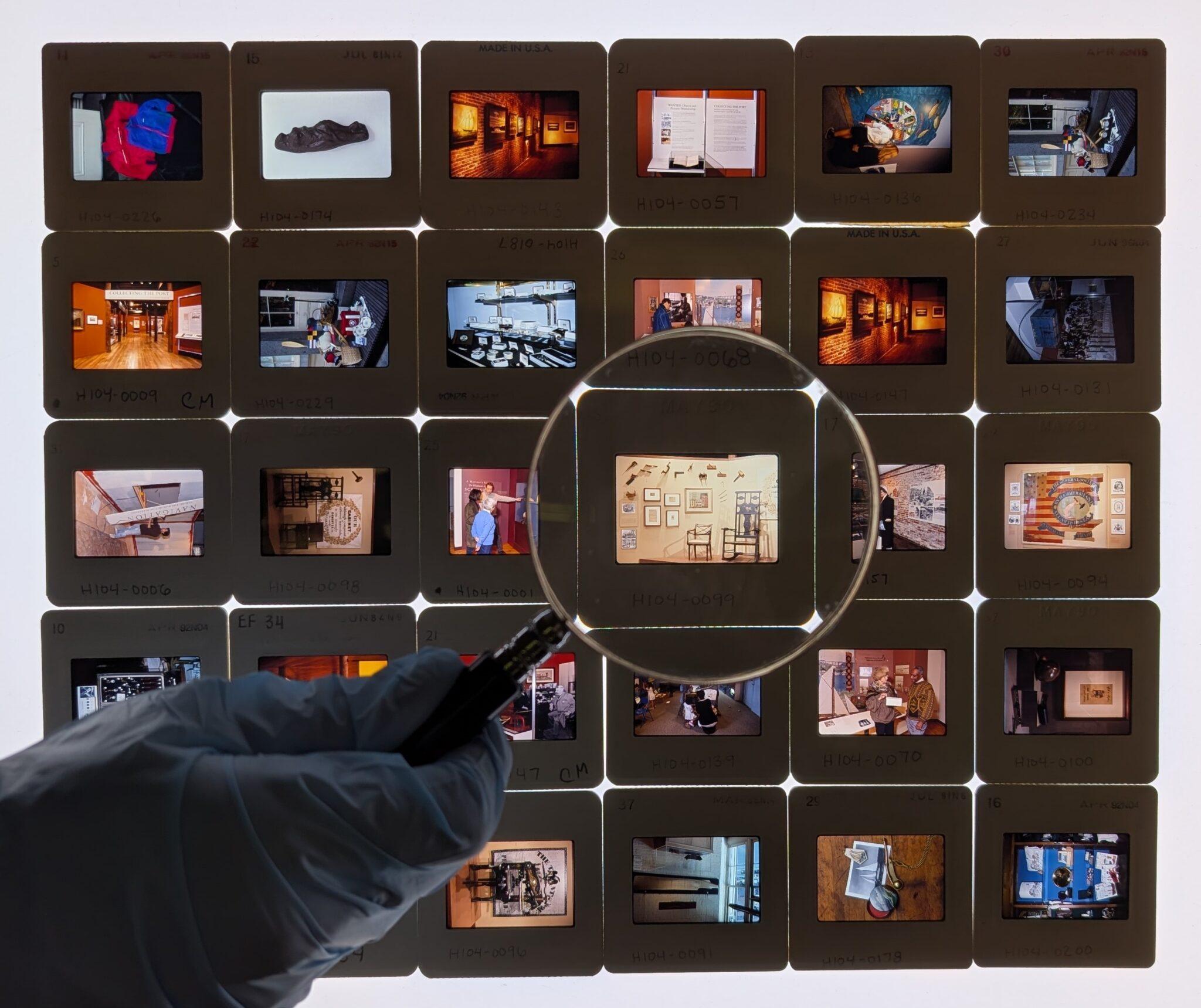
Following the clues hidden in unidentified 35mm slides
A Collections Chronicles Blog
by Lindsey Kratochwill, Archives and Special Collections Intern
August 13, 2026
Perhaps you’ve inherited a carousel projector, discovered a neatly organized box of slides, or uncovered a container of mystery images in an attic or closet. This experience can be overwhelming: photographs can tell powerful stories, but those stories become much harder to decipher when you don’t know when or why an image was taken—or who or what appears in it. Without labels or context, these tiny photographs can be surprisingly difficult to interpret.
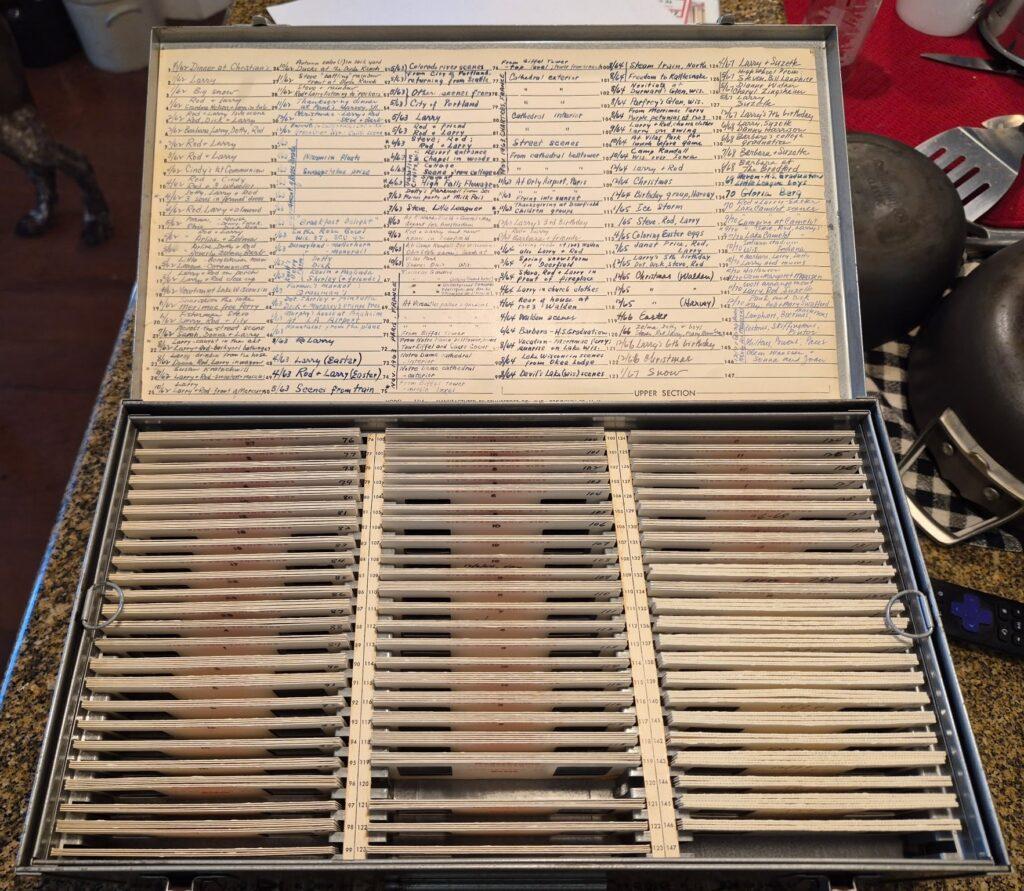
Lindsey’s grandfather’s organized box of stereoscope slides. Photo by Larry Kratochwill.
The South Street Seaport Museum Archives hold more than 33,000 photographic slides (you can read more about the slide collection in one of our previous blog post). Some include dates, handwritten notes, or other metadata[1]Metadata, or “data about data,” is information about an archival object or record that can be used to describe it and make it more accessible. Metadata provides information about three … Continue reading that provide valuable clues. Others leave much more to uncover.
While digitizing and cataloging a box of 240 color slides this Spring, I learned just how much detective work can be needed to identify an image. Sometimes a slide mount included a date stamp or handwritten note. Other times, I had to piece together clues from the image itself, archival records, and other historical resources. Not every mystery has a clear solution, and clues can be incomplete—or even contradictory. But even when an image can’t be fully identified, the process often reveals more about a collection and the people, places, and communities connected to it.
If you’re ready to investigate your own photo collection, grab your metaphorical (or literal!) magnifying glass and let’s start hunting for clues.
Format
First, a quick primer on 35mm slides. Named for the width of the film, these positive images are mounted in cardboard or plastic frames and designed to be projected. Although they appear tiny to the naked eye, projection enlarges them while preserving remarkable detail.
Color 35mm slides became widely available in the mid-1930s and remained especially popular through the mid-20th century. By the 1990s, most amateur photographers had switched to color negative film, though professionals, magazines, and other organizations continued using color slides[2]”The Permanence and Care of Color Photographs” by Henry Gilmer Wilhelm and Carol Brower, 1993.. That timeline helped as I was cataloging slides from the 1980s and 1990s.
Text Present on the Mount
There’s an old adage when it comes to archival photographs: always check the back! The same advice applies to slides. Examine both the front and back of the mount (recto and verso, in archives lingo) for stamped, printed, embossed, or handwritten clues. If you don’t find anything there, be sure to inspect the envelope, folder, divider, or box the slides came in—those can contain valuable information, too.
Dates
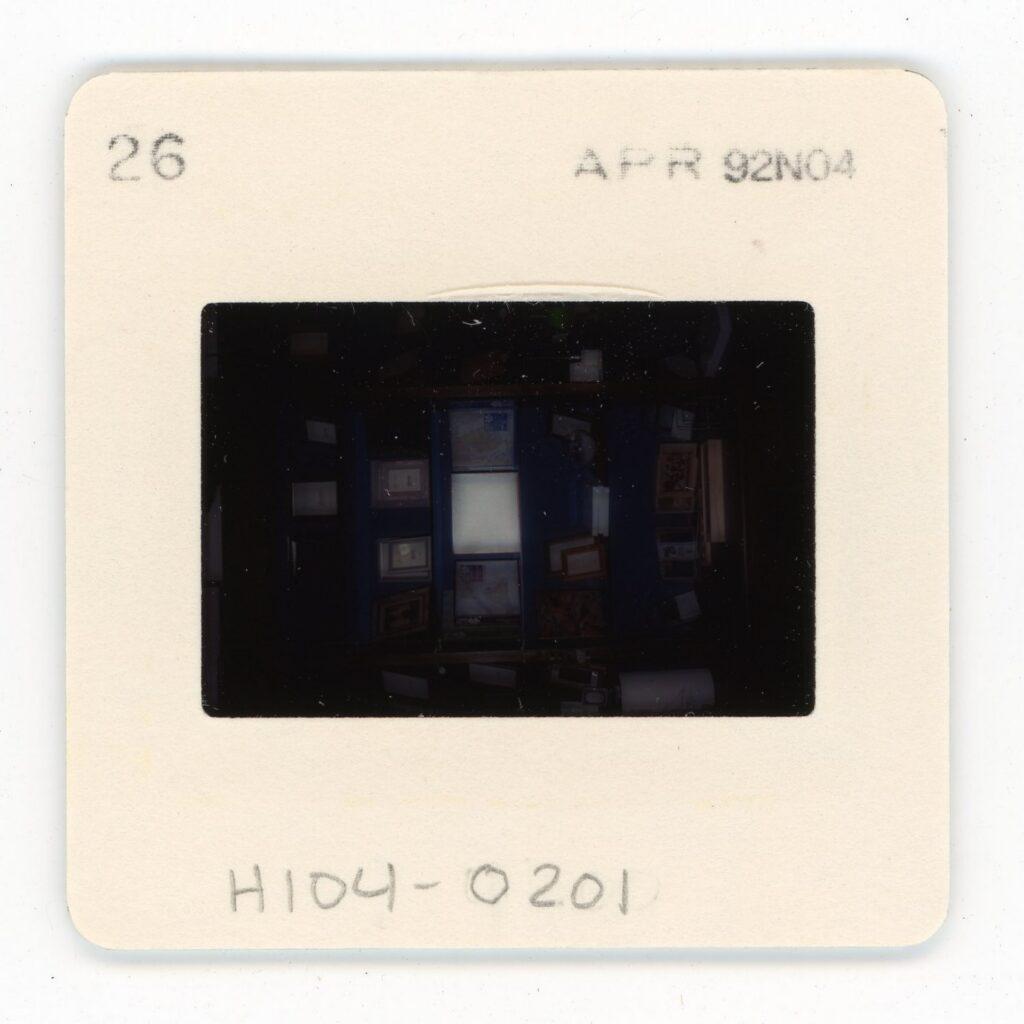
Date stamps can be helpful, but they’re not always what they seem. I discovered that a stamped date often reflects when the slide was processed rather than when the photograph was taken. In one case, two clearly related images had conflicting dates, reminding me that date stamps should be treated as clues—not definitive evidence.
Names
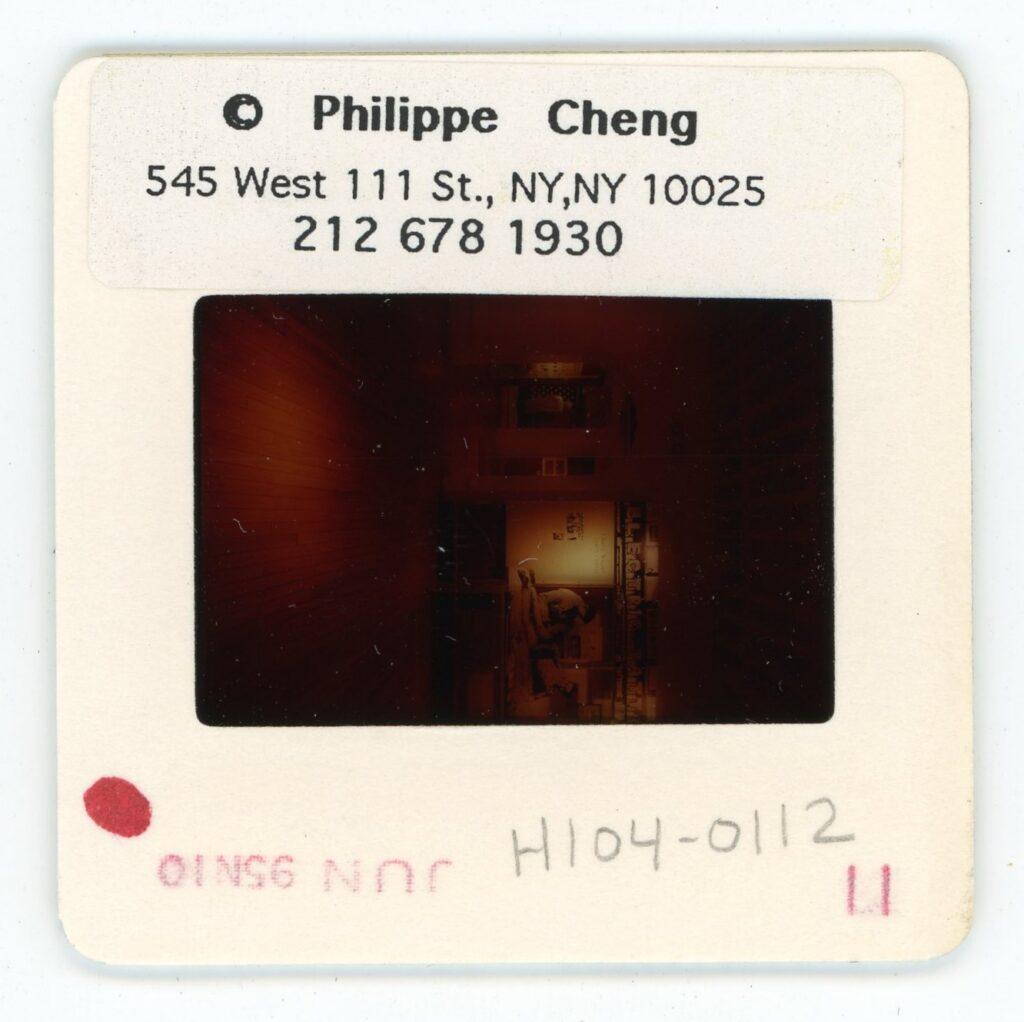
Photographers sometimes stamped their name or copyright on a slide mount, while others wrote their name by hand or added an adhesive label. If you recognize the name, that’s a great start. If not, a quick online search can reveal when and where that photographer was active, providing useful context.
Most of the slides I cataloged didn’t identify the photographer, but in a few cases, a name allowed me to connect the images with documents in the Museum’s institutional archives. While those connections weren’t always conclusive, they often helped narrow down when and why the photographs were taken.
Developing Company
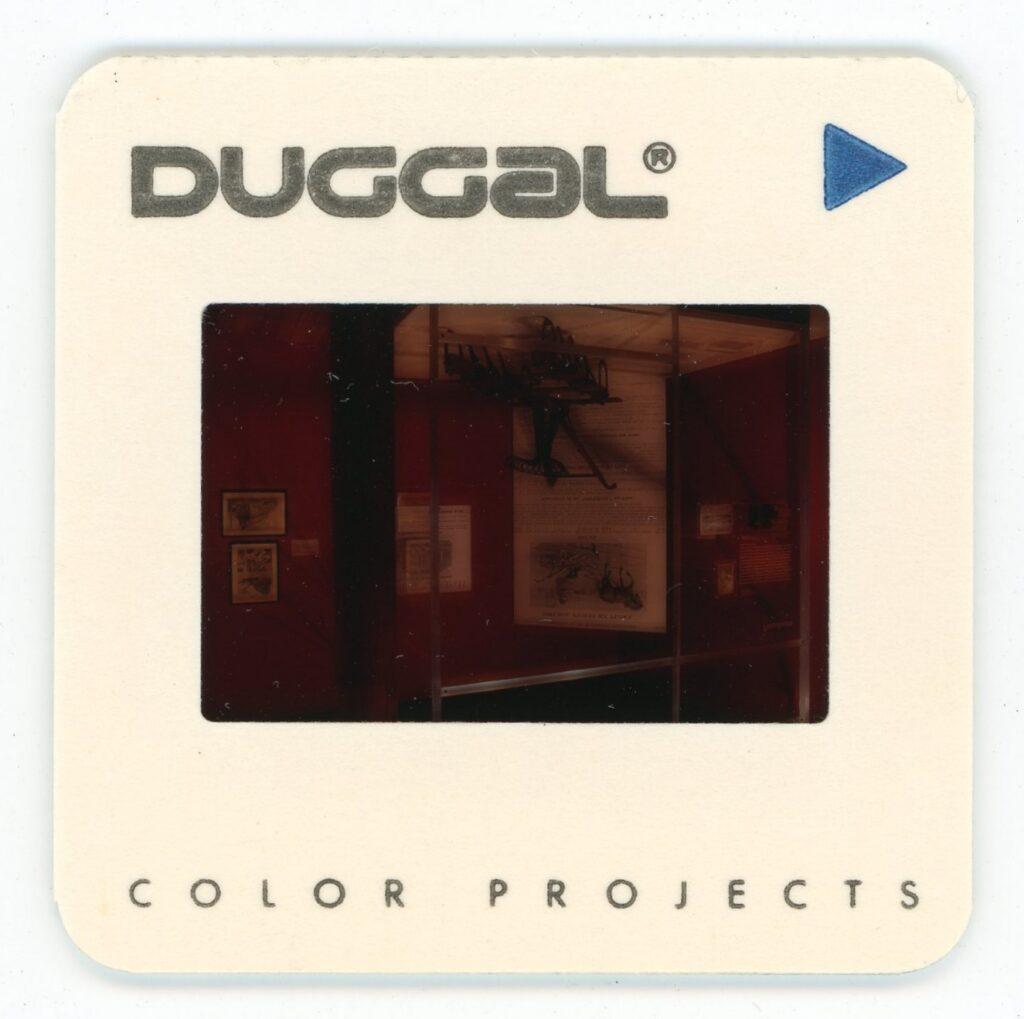
Think of this as a Hail Mary clue. The photo lab that processed a slide may not tell you much, but it’s still worth noting. A company’s years of operation—or even changes to its logo over time—can sometimes help establish an approximate date range.
Many of the Museum’s slides were processed by Duggal, a company that still exists today. Because its branding has remained largely unchanged, this clue proved less useful than I had hoped—but every clue is worth considering.
Image Content
Who, what, when, where, and why? This is where the five W’s come in handy. As you examine each slide, ask yourself these classic questions to guide your search.
Who is in the photo—and what are they wearing?
If you’re lucky, your slide will include people. Take a moment to admire their style, then use it as a clue. While clothing and hairstyles won’t provide an exact date, they can often place a photograph within a particular decade—or even season.
You may also be able to identify the people themselves. If they’re still alive and you know them personally, they can become invaluable sources of information. Otherwise, their apparent age may help establish an approximate date.
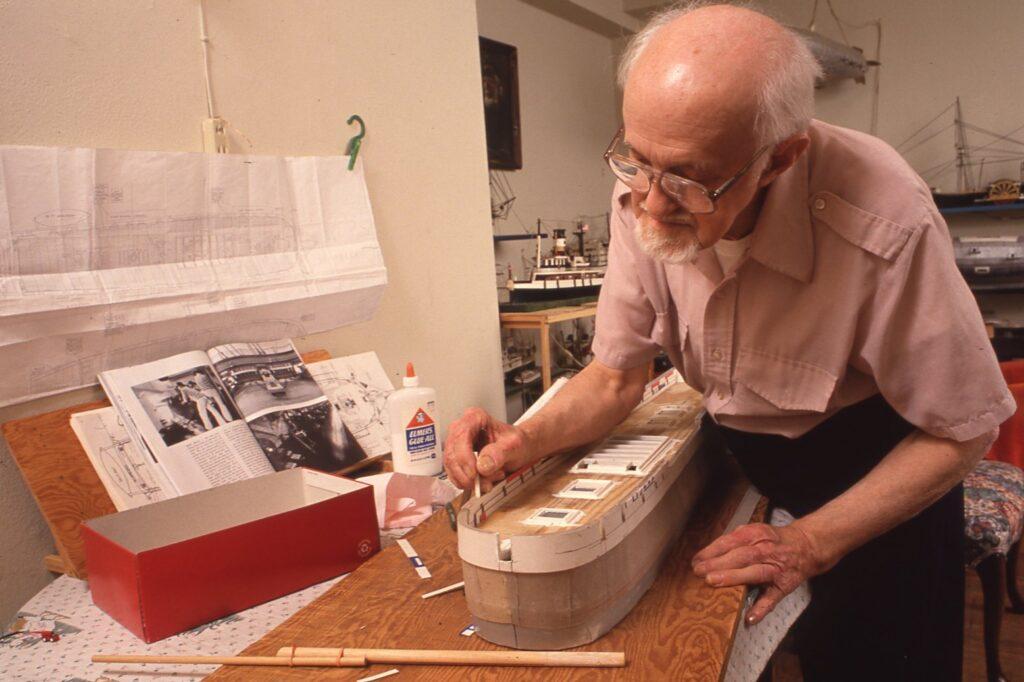
The Museum’s slides didn’t include many people, but a few featured clothing that clearly dated to the 1980s and 1990s. With help from Martina Caruso, Director of Collections and Exhibitions, I also identified Murray Cukier (1914–2004), a well-known ship modelmaker. A quick search led me to a New York Times article describing how Cukier had been building ship models since childhood and continued the craft throughout his life.[3]“A Fleet of the Mind Takes Tiny Form” by David Gonzalez, The New York Times, September 2, 1992.
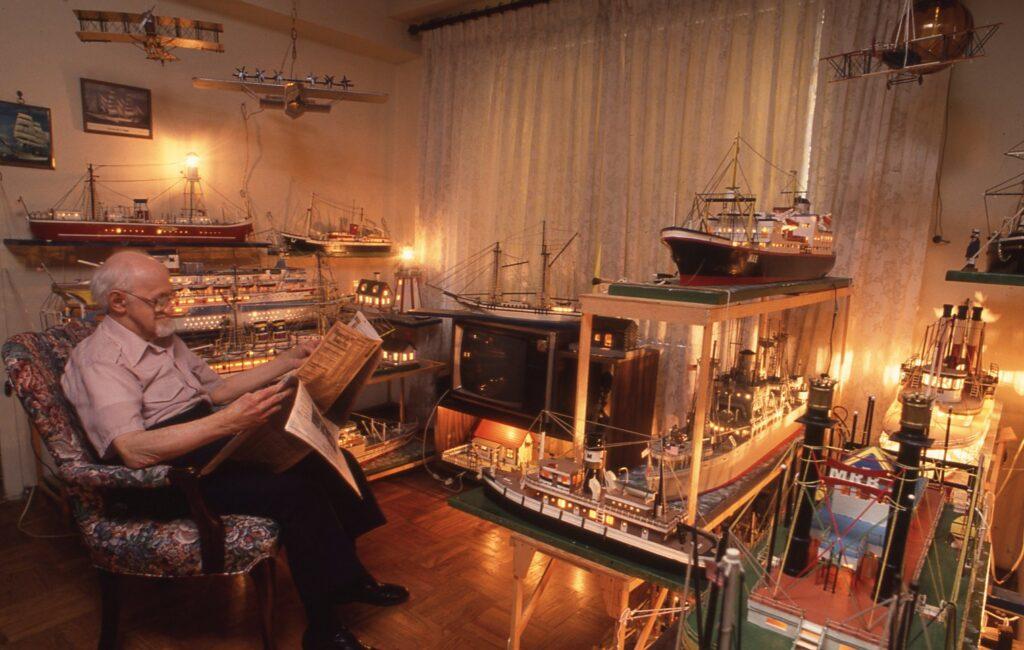
Left: [Murray Cukier sitting in a chair amongst illuminated ship models, reading a newspaper], ca. 1980s-ca. 1990s. South Street Seaport Museum Archives H104-0074
Right: [Murray Cukier building a wooden ship model], ca. 1980s-ca. 1990s. South Street Seaport Museum Archives H104-0075
Once I knew his identity, I searched our collections database and found the ship models he had donated to the Museum, along with an exhibition of his work held in 1998. The exhibition file even included a photograph of the introductory panel, which described Cukier’s imaginative approach to modelmaking. That context enriched both the catalog record and my understanding of the images.
Where was the photo taken? When—and why?
Sometimes the biggest clues are in the background. Buildings, street signs, address numbers, cars, or other landmarks can help identify both a location and an approximate date. If the photograph is indoors, pay attention to architectural details such as ceilings, lighting, flooring, windows, or doorways. Even seemingly ordinary features can identify a familiar space.
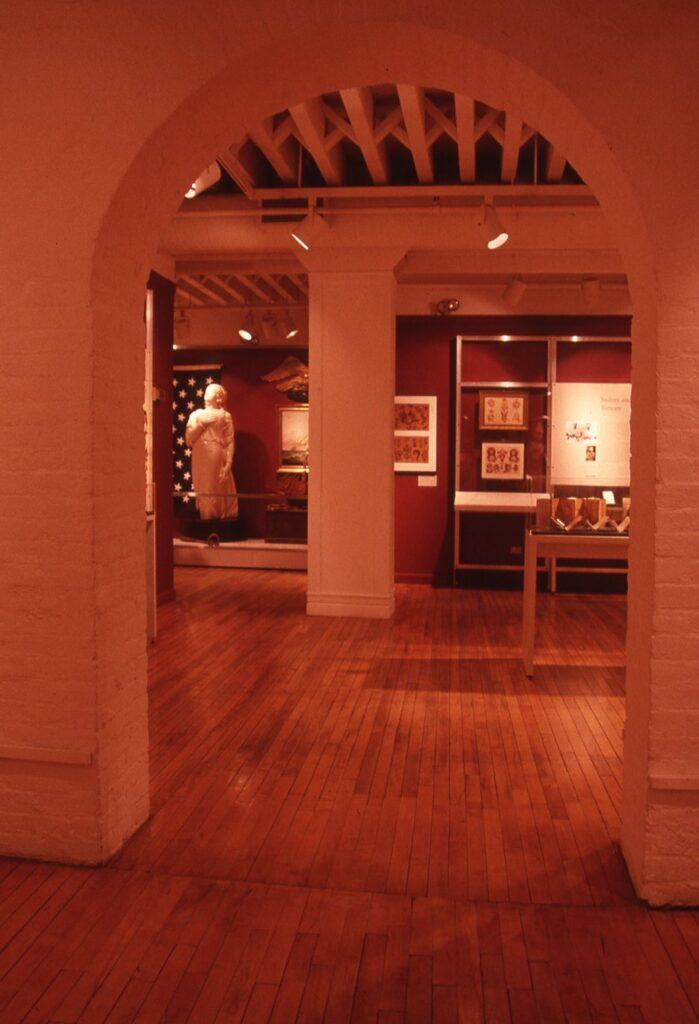
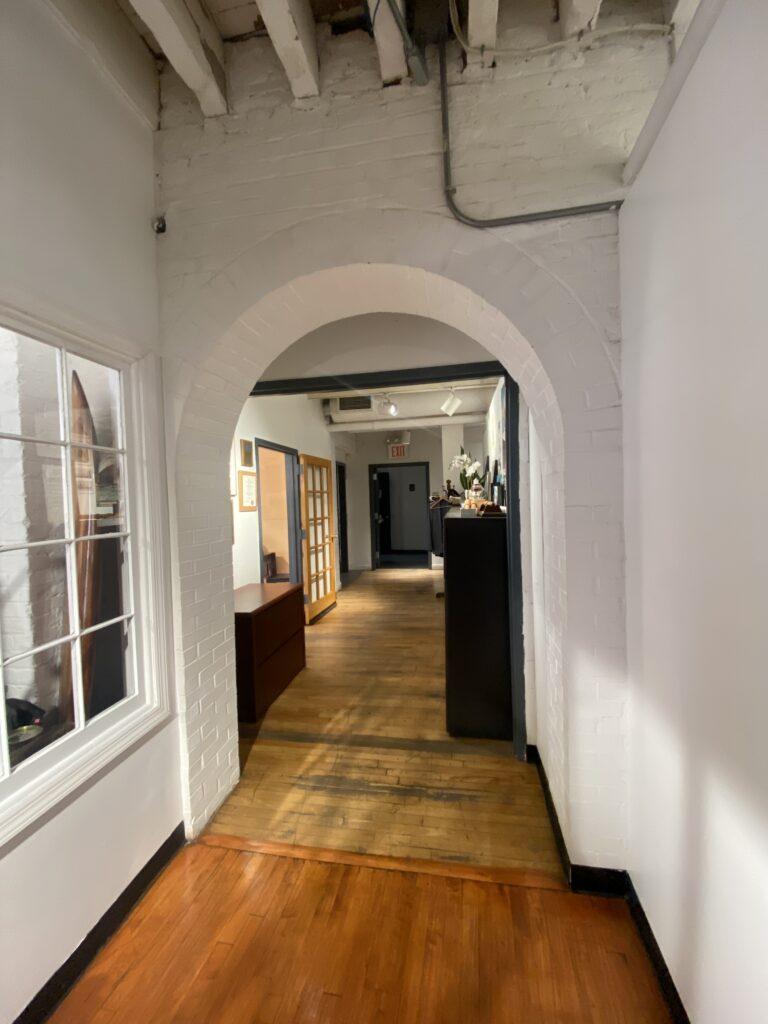
Left: [View of displays in “The Devil’s Blue” exhibition through an arched doorway] June 1995. South Street Seaport Museum Archives H104-0123
For one slide, I recognized a former Museum gallery by its track lighting and distinctive arched doorways. Today, the area serves as administrative office space, making it immediately familiar. Identifying the location also allowed me to identify the exhibition: The Devil’s Blue: American Tattoo Art and Practice Through the Port of New York (1840–1961) (1995).
Location can also reveal when a photograph was taken. Are the trees in full leaf? Are flowers blooming? Has a nearby building since been demolished? These details can help narrow the timeframe.
Tools like Google Street View can also be surprisingly helpful, although it’s important to remember that neighborhoods change over time. I even visited one location in person to compare it with the slides. You can even make it into a field trip: try going to the location in person to compare! This is what I did to try to figure out where some of the photos had been staged. Turns out, they were on the steps outside of our 207 Water Street, which was a gift shop at the time, and is now used as museum program space.
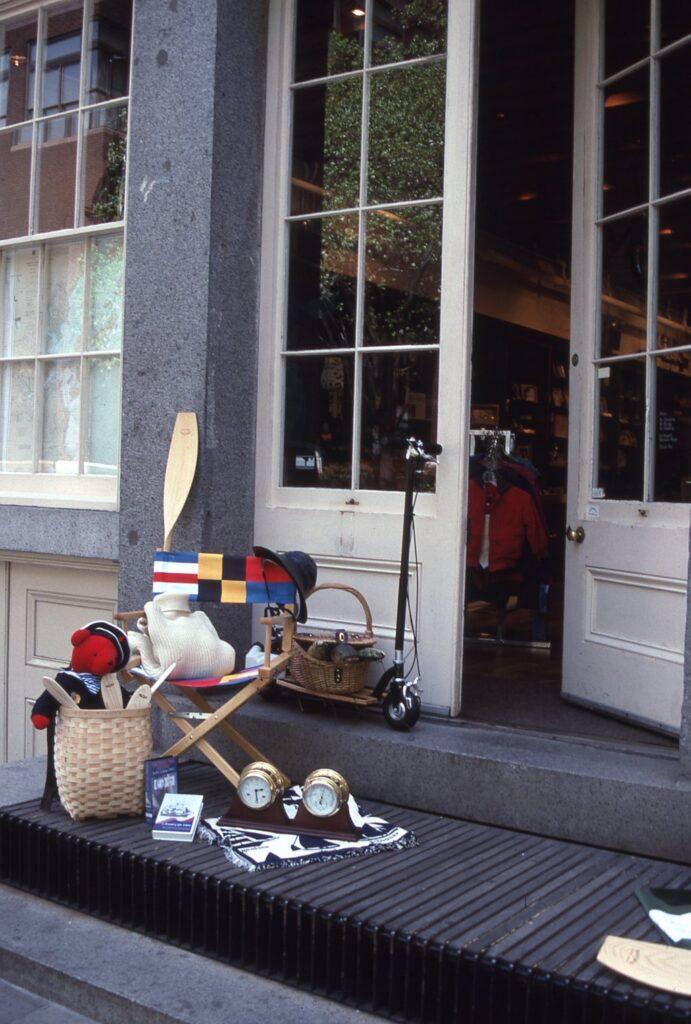
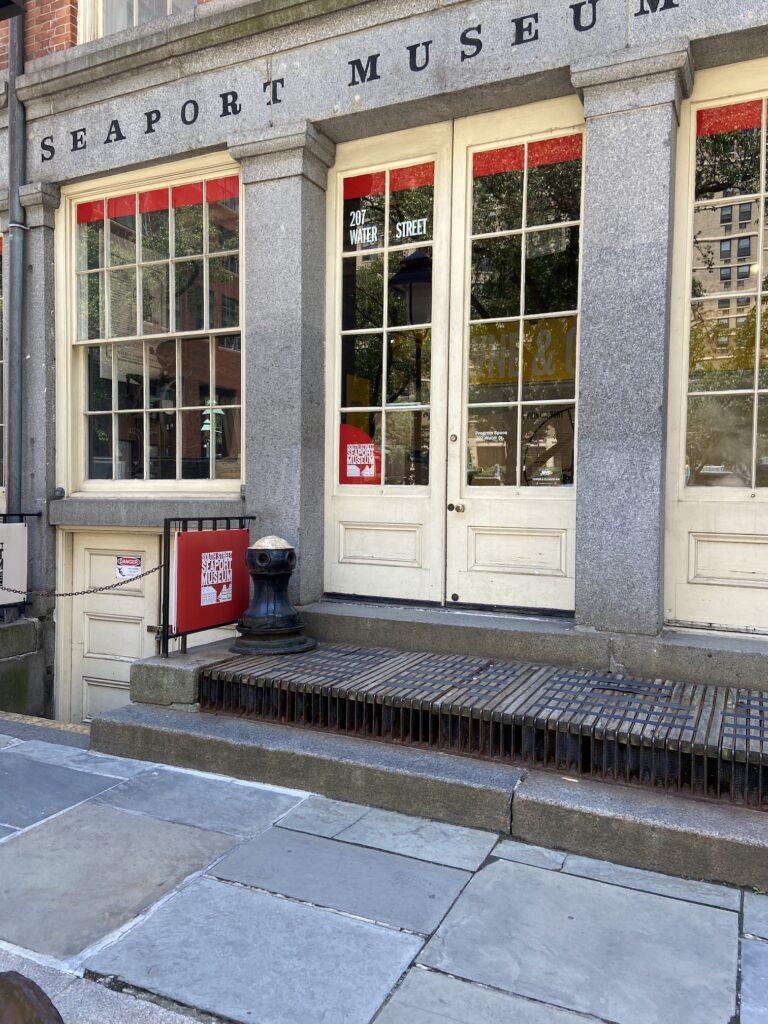
Left: [A display of merchandise on the steps of the Seaport Museum Gift Shop], April 1992. South Street Seaport Museum Archives H104-0233
What Else Is in the Photo?
Throughout my project I had one advantage: I already knew this box contained slides documenting Museum exhibitions and the gift shop. Even when there was little written metadata, I could turn to the Museum’s collections database to identify objects, determine when they were acquired, and see which exhibitions they had appeared in. Signs, labels, and other visible text also helped provide context.
One slide, for example, had only a processing date on the mount: January 1984. It was a good starting point, but it didn’t identify the exhibition.
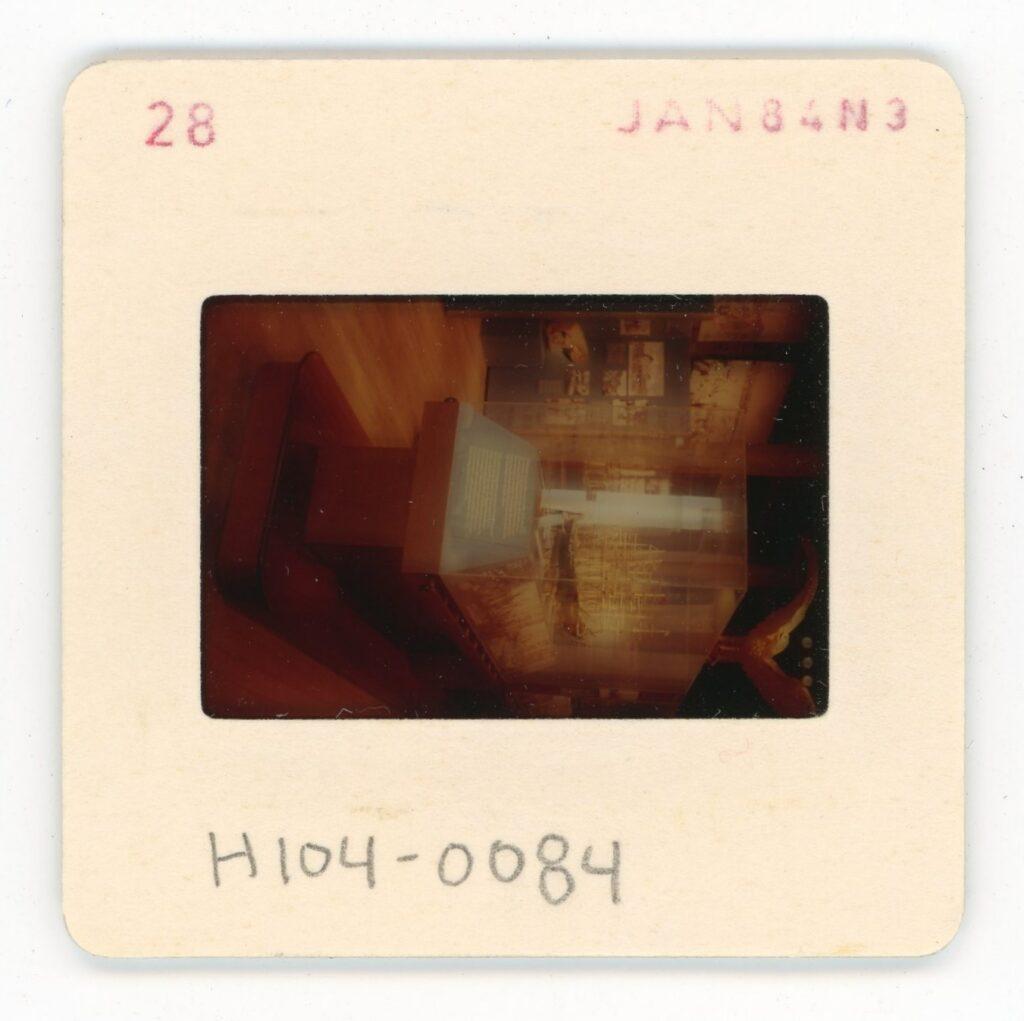
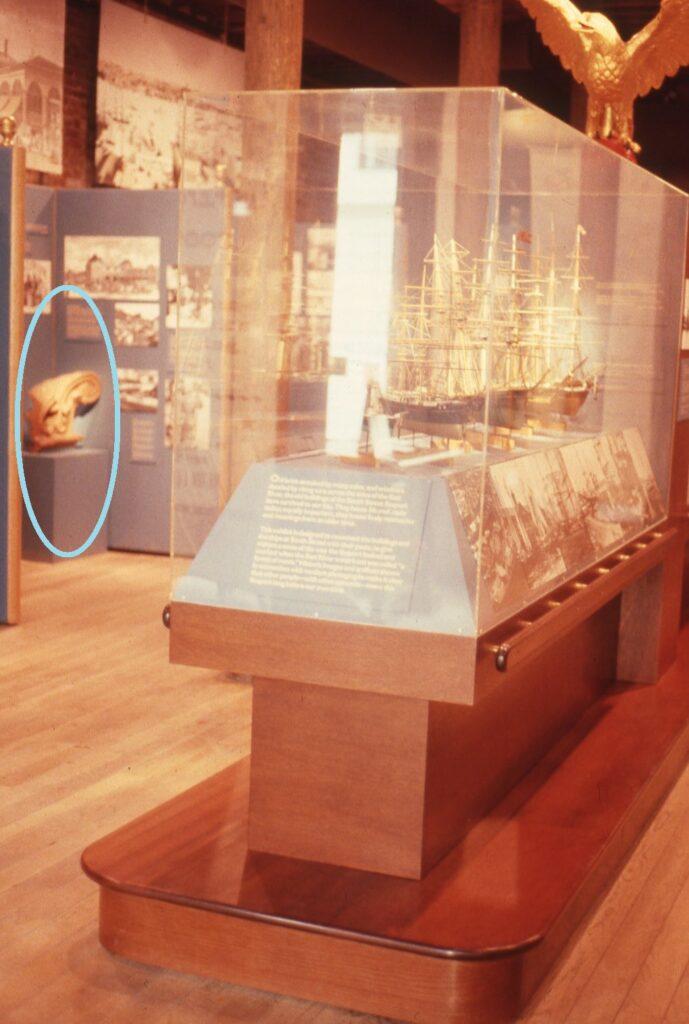
Right: [Display case of ship models beneath an eagle sculpture], 1983-1984. South Street Seaport Museum Archives H104-0084
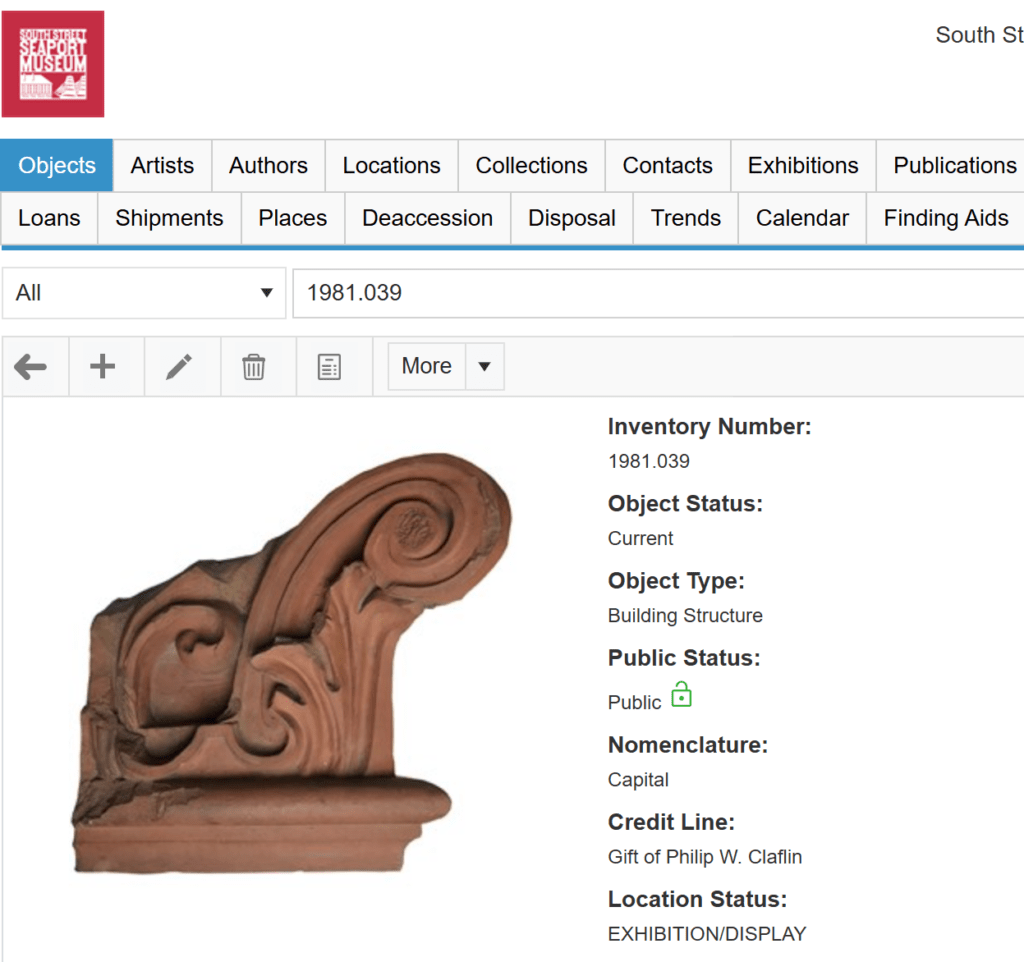
Looking more closely at the image, one object immediately stood out: a terra cotta architectural capital. In the foreground were ship models displayed beneath a large eagle sculpture. Because the ship models were harder to identify, I started with the capital. A keyword search in the collections database revealed that it had appeared in the exhibition Secrets of South Street (1983).
That seemed promising, but I wanted confirmation. I turned to an issue of Seaport magazine from the same period, which described the exhibition’s centerpiece as a recreation of the mid-19th century “forest of masts” using ship models. The description matched the display in the slide almost perfectly.
To be certain, I checked the Institutional Archives. There, I found a draft of the exhibition labels, which confirmed I had identified the exhibition correctly.
What surprised me most was how much institutional memory is preserved in seemingly ordinary records. A single slide might not tell us much on its own, but when connected to exhibition files, object records, magazines, and photographs, it becomes part of a much larger story about the Museum and its history.
This was a great start, but there wasn’t any information about what exhibition it depicted. I spent some time looking at the image itself and noticed one very identifiable object in the background: a terra cotta architectural capital. In the foreground, I noticed the display case of ship models and the large eagle sculpture on top.
Because the ship models were harder to identify, I started with the capital, which I was able to find using a keyword search in our database. From there, I could see which exhibitions the object was in: Secrets of South Street (1983).[4]”Secrets of South Street,” Seaport magazine, Summer 1983, pp. 48-51.
Follow the Context: Arrangement, Resources, and Experts
While you can’t assume that there was an intentional organization for the box or folder you’ve inherited, the way it is arranged can still provide valuable context. Pay attention to how the photos you’re trying to identify connect (or don’t connect) to the images that come before or after them. Do they appear to be from a similar time period, location, or event? Look through the entire collection, as slides stored elsewhere in the box may provide clues that help identify an image—or at least narrow down the possibilities.
In the case of the slides I was cataloging, the box was mostly organized by subject matter, though there were occasional outliers and slides that appeared to be out of order. The slides with dates on them were from the 1980s and 1990s, so it was reasonable to assume that the undated slides were likely from a similar period. This helped narrow my search when I was working with limited information.
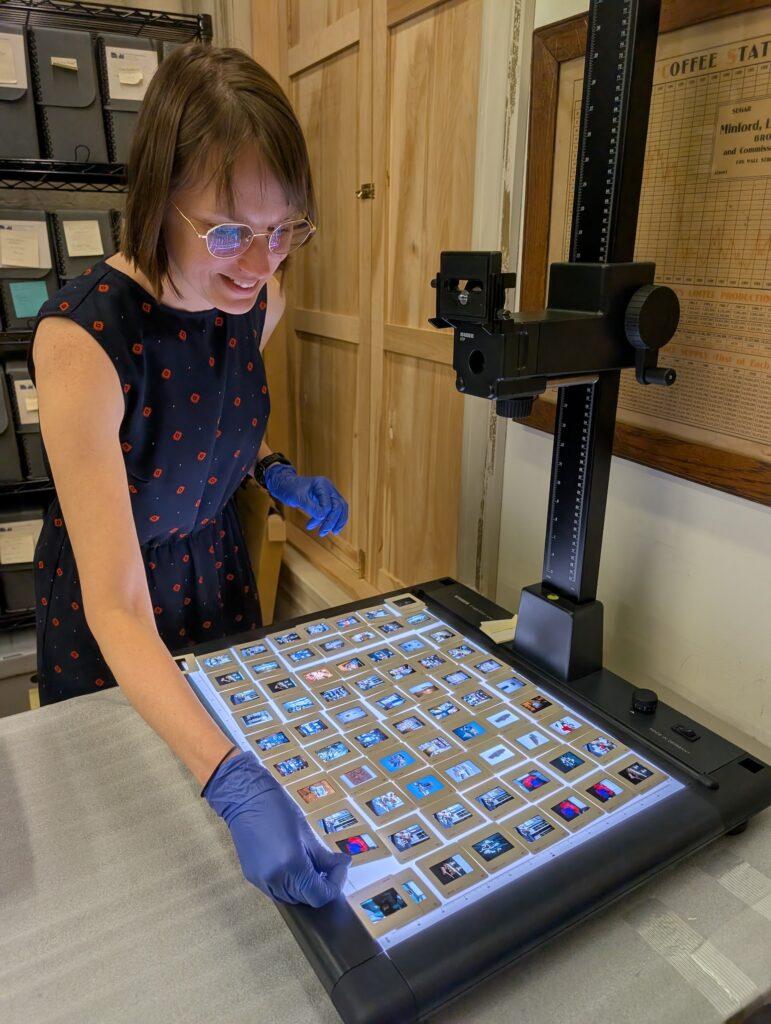
Once you’ve gathered all the clues you can from the object itself, consider what outside resources may help fill in the gaps. I had the advantage that the Museum is a long-standing institution with a rich history that was frequently covered in the press. Archival newspapers—particularly local cultural event listings and recommendations—became valuable resources. Other forms of media can also provide important context. For me, Seaport magazine was especially useful when I had an approximate date for a slide but did not yet know which exhibition or event it depicted.
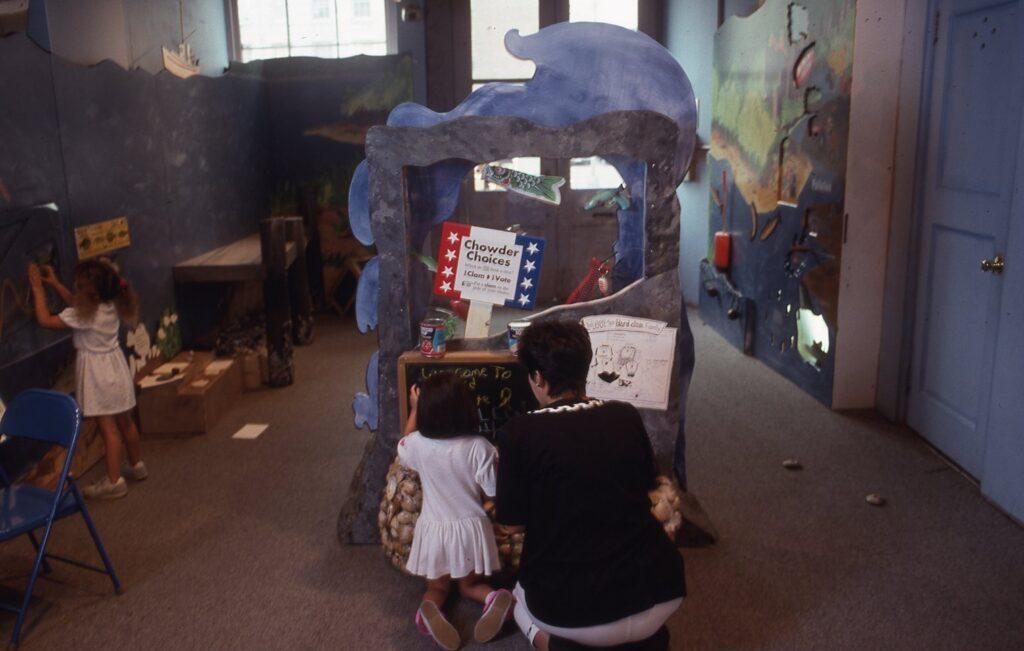
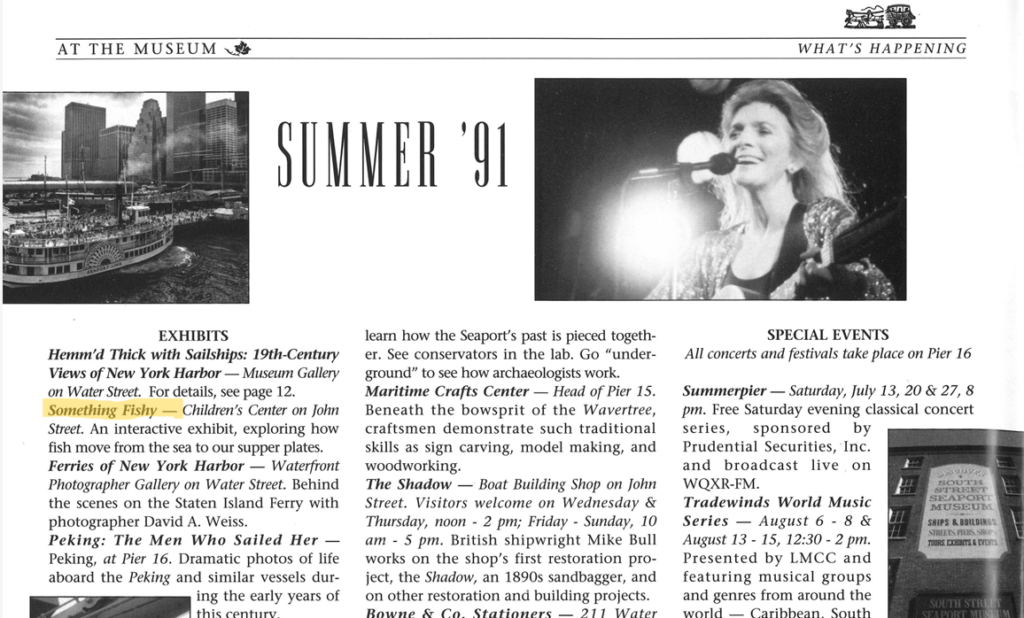
Left: [Three visitors interacting with displays about clams and fish at a children’s exhibition], July 1991. South Street Seaport Museum Archives H104-0138
When I exhausted my own research options, I turned to the Collections and Archives staff, Martina Caruso and Elena Abou Mrad, whose knowledge of the Museum’s collections and archives often pointed me toward additional sources and helped confirm my findings.
You likely have your own version of experts who can help with your research. They might be family elders, longtime community members, former employees, or subject specialists. Reaching out to them can provide important context, uncover stories that were never documented, and reveal connections you may not have found on your own.
One of the biggest slide mysteries I encountered early in the project was an image documenting an exhibition that looked completely different from the rest of the slides in the box. I first examined the slide mount, but the only identifying mark was a stamped number: “5.” Unfortunately, that did not provide much help.
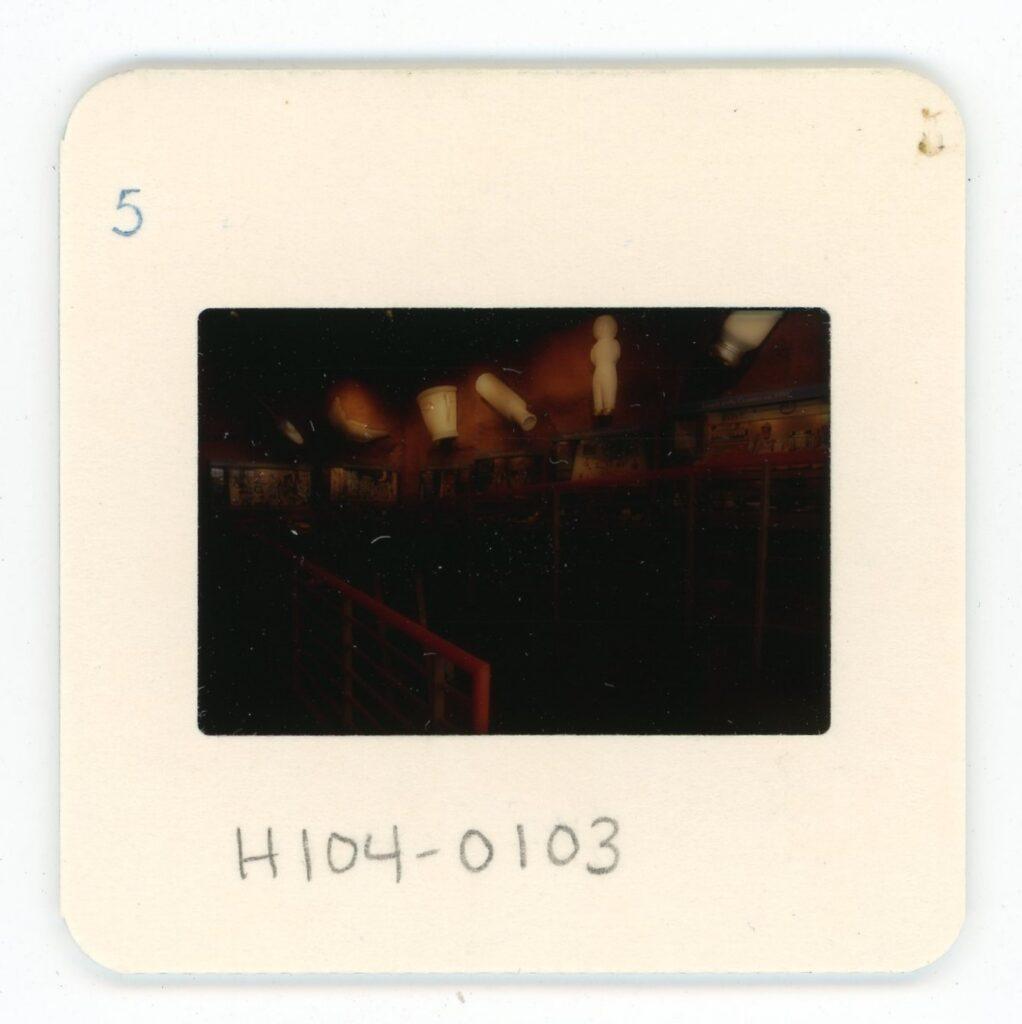
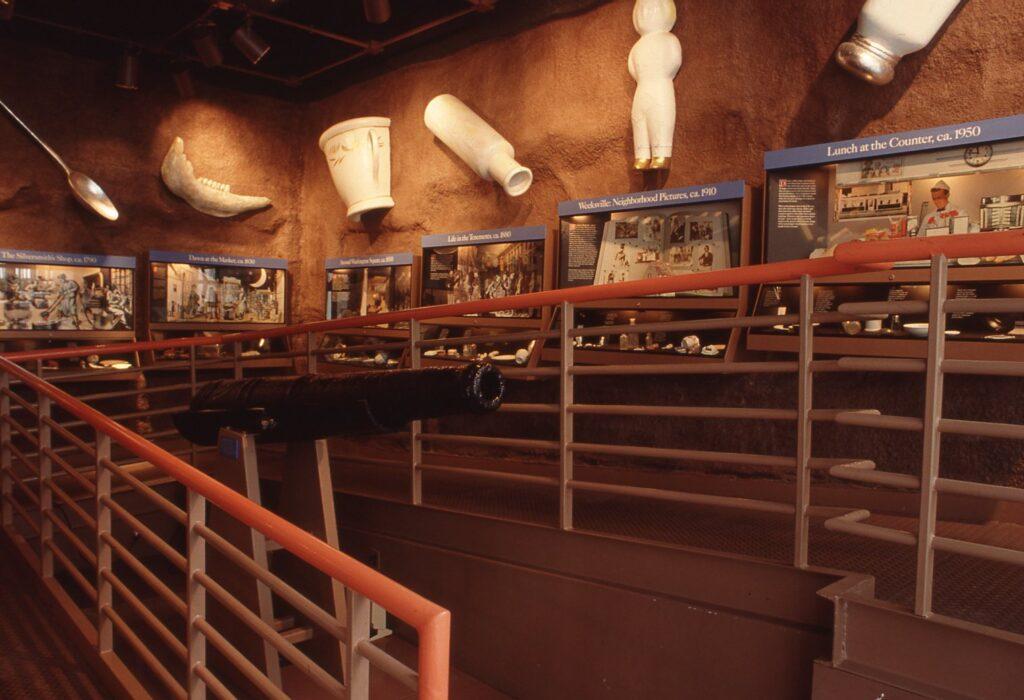
[Archaeology display at New York Unearthed Exhibition], ca. 1991. South Street Seaport Museum Archives H104-0103
I then turned my attention to the image itself. There were no people visible, so I couldn’t use individuals as a clue. The photograph also lacked recognizable architectural features, so I focused instead on the objects displayed in the exhibition.
Although the objects were small, I zoomed in and used keyword searches in our collections database to see if I could identify anything on view. When that did not produce an answer, I analyzed the text and types of objects visible in the image and determined that the exhibition was likely related to archaeology. Since I could not find a matching exhibition record in our database, I expanded my search online using different combinations of keywords.
Eventually, I found a blog post and newspaper articles referencing an exhibition called New York Unearthed, which was on view at 17 State Street beginning in 1990 and continuing into the early 2000s. With this new lead, I returned to the experts—Martina and Elena—who helped confirm that this was, in fact, the exhibition shown in the slide.
Mystery solved!
Pay It Forward: Capture Metadata for the Future
Ultimately, this project taught me the real value of recordkeeping in museums—and the power of institutional archives. After all, there is still plenty of information that you simply can’t find through a Google search. Sometimes the answers are tucked away in filing cabinets, hidden in internal databases, or preserved in the memories of the people who were there. And sometimes, those records were never created, were lost, or were not considered important enough to save.
So, pay it forward: Once you have identified who or what a photograph depicts, or determined when and where it was taken, make sure to document that information and keep it connected to the image itself. If you are digitizing the photographs, you can add these details as digital metadata, or create your own inventory or spreadsheet to track what you know. If you choose the spreadsheet route, be sure to number your photographs with a graphite pencil so you can always match each image with its corresponding information.
Finally, if the images are particularly meaningful, take steps to preserve the original slides as best you can[5]If you’re curious about how to archive a full collection of mixed materials, check out one of our previous blog posts, complete with preservation tips.”From Attics to Archives” by Elena … Continue reading. Slides are made from 35mm film and are highly susceptible to deterioration over time. In the Museum’s collection, I found several examples that were already showing signs of color dye degradation[6]35mm color slides contain three color dyes in order to produce their vibrant images: yellow, magenta, and cyan. When the slides are subjected to light or heat, these dyes can begin to degrade, which … Continue reading. While we can’t stop the passage of time entirely, storing slides in acid-free boxes or envelopes—and keeping them in a cool, stable environment—can help slow the process.
And remember: even if the physical slide eventually fades, the story behind it doesn’t have to. By documenting what you know today, you are creating a resource for the researchers, family members, and curious minds of tomorrow.
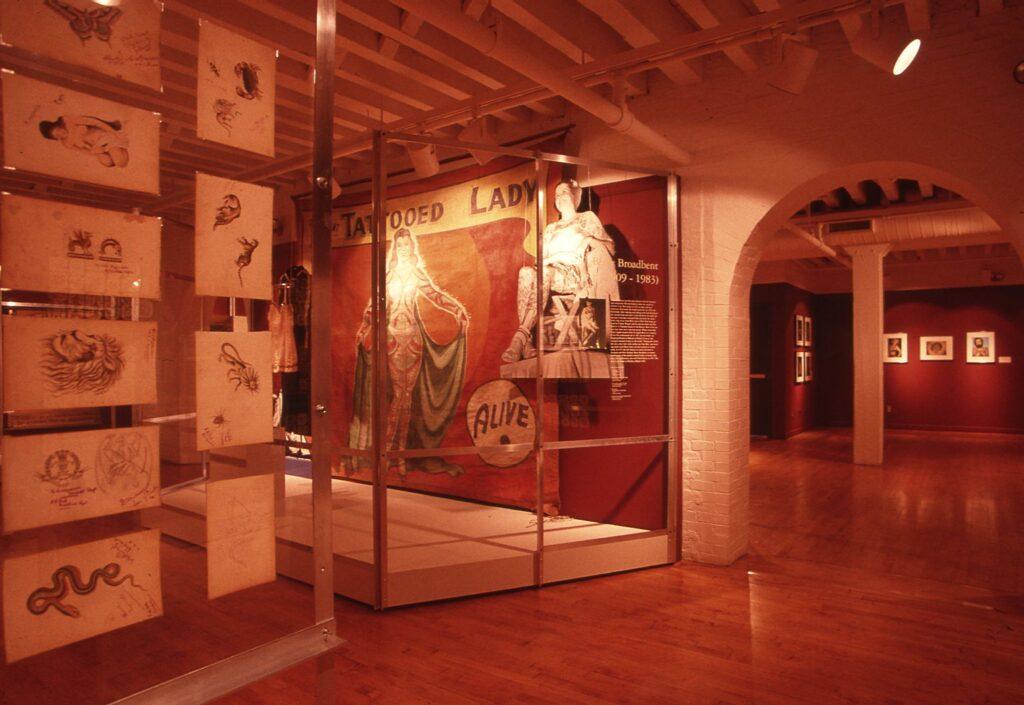
[Display about tattooed women in “The Devil’s Blue” exhibition], June 1995. South Street Seaport Museum Archives H104-0116
Additional Readings and Resources
“Information for Community Archives: Photographs” Society of American Archivists
“Digital Initiatives: Dating Photographs Libguide,” North Dakota State Library
“Six Tips for Preserving Family Archives,” Jessica Scott, Smithsonian Institution Archives, November 26, 2020.
“Photographic and Image Materials Cheatsheet,” Preservation Self Assessment Program (PSAP)
“Chronology of Film: History of Film from 1889 to present,” Kodak
“Kodachrome Dating,” Felice Graciela Robles, Gawain Weaver Art Conservation
“Fading Out: The End of 35mm Slide Transparencies,” Tina Weidner, The Electronic Media Review, Volume Two: 2011-2012.
References
| ↑1 | Metadata, or “data about data,” is information about an archival object or record that can be used to describe it and make it more accessible. Metadata provides information about three foundational archival concepts: content, context, and structure. It often can tell us how a record was created and when, and different institutions use different standards for creating, capturing, and preserving metadata. “Setting the Stage,” Anne Gilliland, Introduction to Metadata (Third Edition). |
|---|---|
| ↑2 | ”The Permanence and Care of Color Photographs” by Henry Gilmer Wilhelm and Carol Brower, 1993. |
| ↑3 | “A Fleet of the Mind Takes Tiny Form” by David Gonzalez, The New York Times, September 2, 1992. |
| ↑4 | ”Secrets of South Street,” Seaport magazine, Summer 1983, pp. 48-51. |
| ↑5 | If you’re curious about how to archive a full collection of mixed materials, check out one of our previous blog posts, complete with preservation tips.”From Attics to Archives” by Elena Abou Mrad, Collections Chronicles Blog. |
| ↑6 | 35mm color slides contain three color dyes in order to produce their vibrant images: yellow, magenta, and cyan. When the slides are subjected to light or heat, these dyes can begin to degrade, which will make the image appear tinted. Exposure to light and heat can speed up this degradation and put 35mm slides at risk. Some brands of slide film will be more or less susceptible to degradation, and film made with acetate will be more susceptible than film made with polyester. The best way to slow degradation is to keep slides in dark, cold, and dry conditions. “Collection ID Guide: Slides & Transparencies” Preservation Self Assessment (PSAP). |