How Schooner Pioneer’s Sails Became a Platform for Maritime Storytelling
A Blog
By Rob Wilson, Art Director and Operations Manager—Bowne & Co.
May 29, 2026
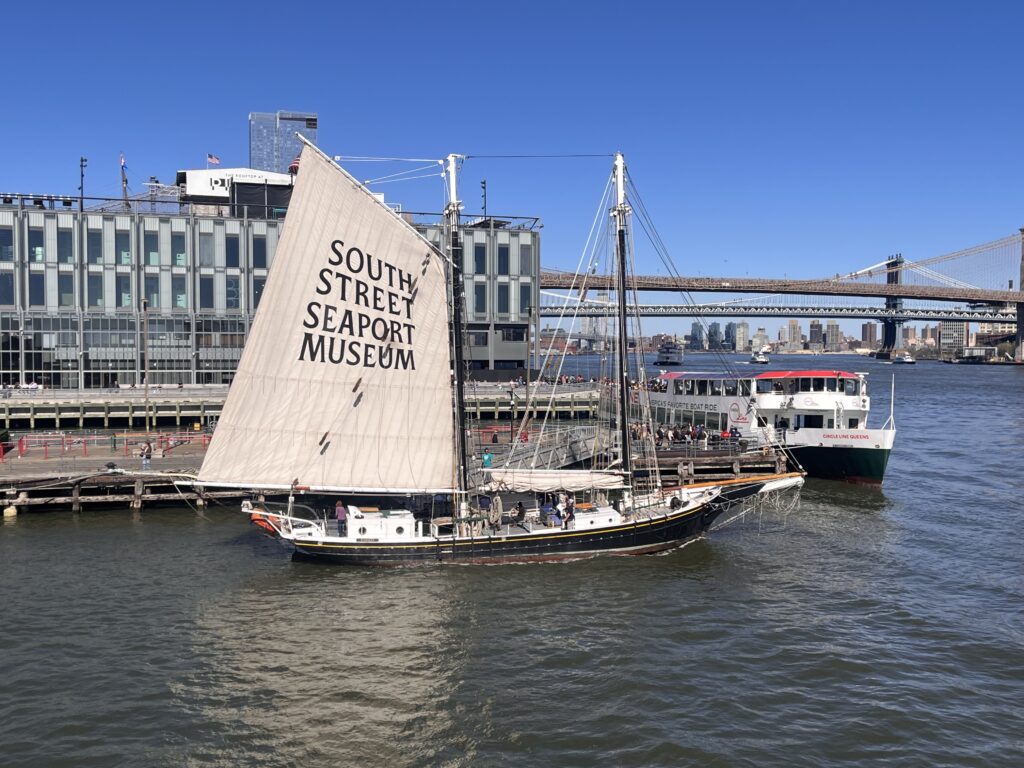
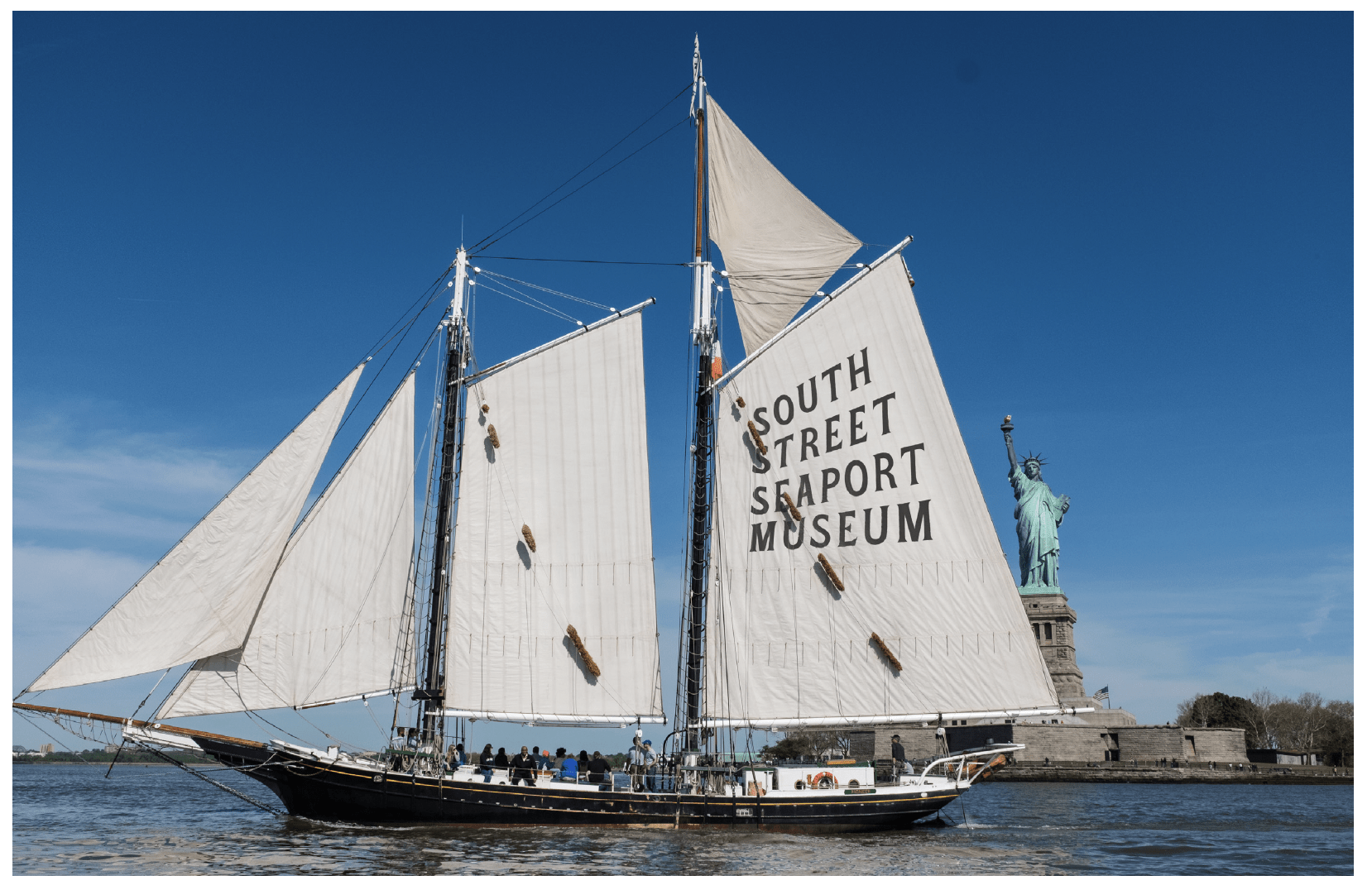
The idea of using the sails of schooner Pioneer as a platform for Museum messaging was not entirely novel. Many contemporary tall ships sail with logos, graphics, or sponsorships displayed prominently on their canvas. On the surface, sails seem like the perfect medium for branding and advertising: large, highly visible surfaces constantly moving through the city and harbor. Contemporary examples are easy to find. Historical examples, however, proved more complicated.
At the beginning of this project, the central question was simple: Were sails used for advertising or messaging during the age of sail?
The first phase of research focused on historical paintings of sailing ships. The results were discouraging. Aside from occasional decorative or symbolic markings—such as the red crosses painted on 16th century Portuguese vessels—most ships were depicted with plain white sails devoid of branding, text, or embellishment.
When traditional archival research reached a dead end, it became necessary to widen the search. One of the advantages of working at the Seaport Museum is access to a living community of sailors, waterfront workers, and maritime historians who carry their own historical knowledge. Conversations over docks, workshops, and more than a few beers began to provide important context.
There was a broad consensus among sailors that branded sails did exist during the 19th century, but they were uncommon on voyaging ships. This shifted the research in two important ways.
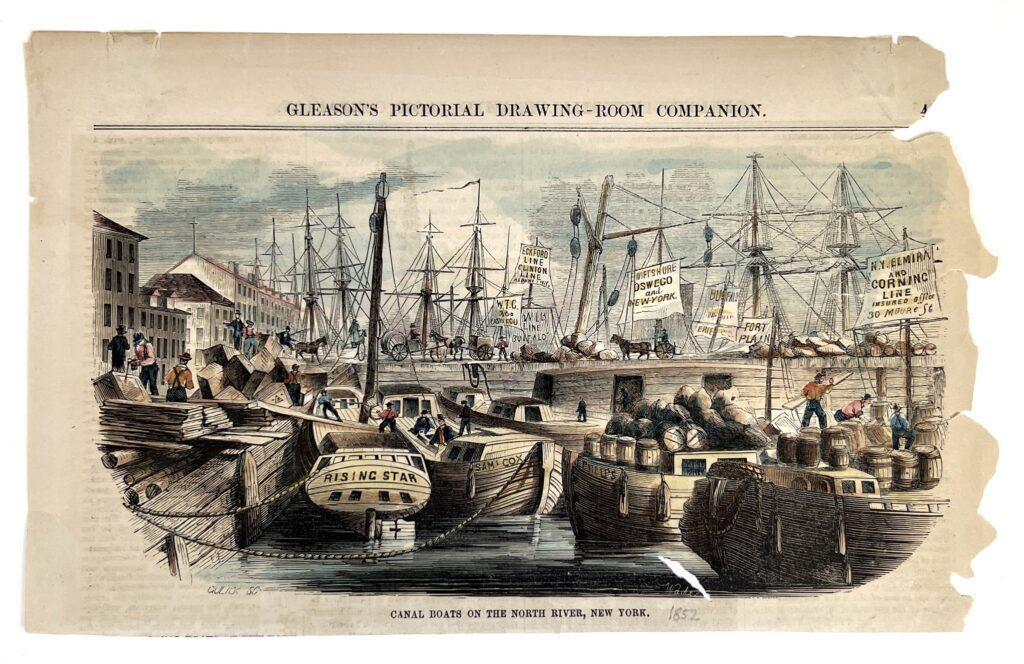
Gleason’s Pictorial Drawing-Room Companion, publisher. “Canal Boats on the North River, New York” 1852. South Street Seaport Museum 2006.043.0005
First, voyaging ships had to be understood not as static objects, but as working vessels constantly exposed to harsh conditions. Sails were regularly patched, repaired, and replaced. Any painted or applied advertisement would have been vulnerable to rapid wear and deterioration.
Second, the goals of a voyaging ship and the goals of advertising are rarely aligned. Advertising depends on visibility and repeated exposure to a target audience. Voyaging ships, by contrast, spent weeks or months at sea transporting cargo across long distances. In that context, sails become a far less practical platform for messaging.
This raised another question: if branded sails existed historically, why are examples so difficult to find?
A breakthrough came through a reference to a photograph of a vessel in Gloucester Harbor. Research eventually led to a series of photographs from the Cape Ann Museum documenting Gloucester Harbor around 1900. Among them was a small vessel with a boldly branded sail: the waterboat Aqua Pura.
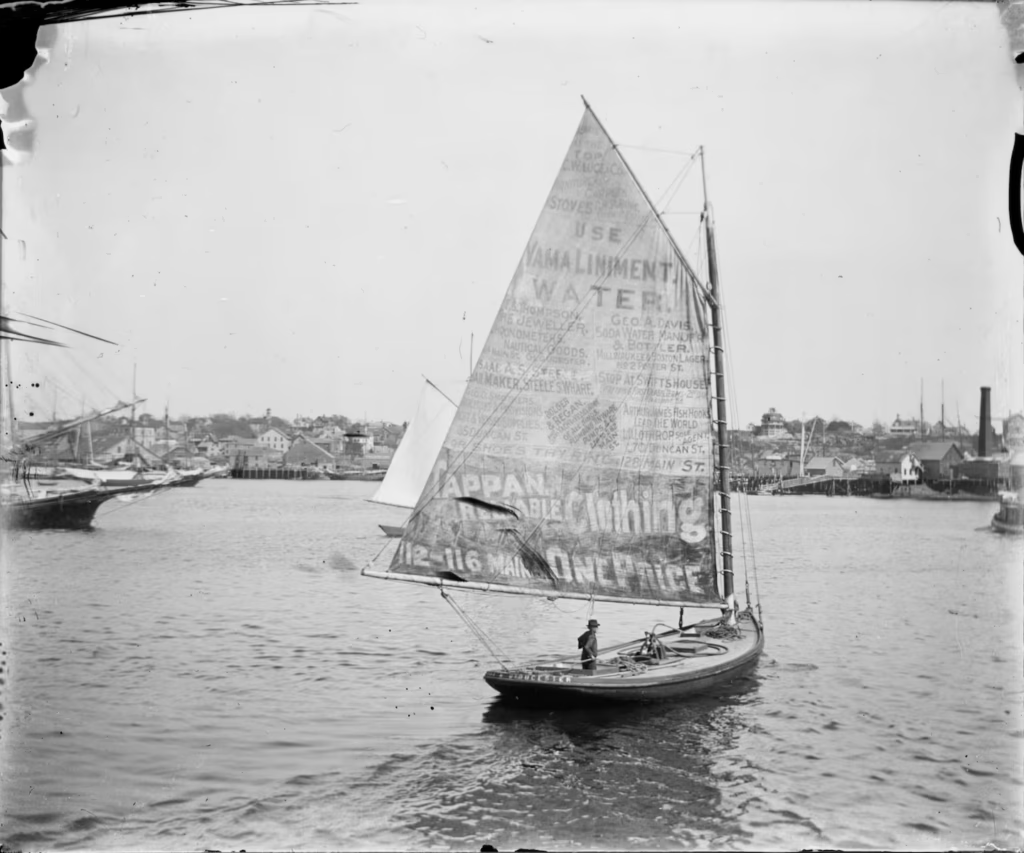
Ernest L. Blatchford, “Waterboat Aqua Pura in Gloucester Harbor,” circa 1900. Cape Ann Museum.
The difference between Aqua Pura and an oceangoing merchant vessel was immediately clear. Waterboats operated locally within the harbor, selling fresh water to larger ships. Unlike voyaging vessels, Aqua Pura remained highly visible and relatively stationary, loading and unloading water throughout Gloucester Harbor. Its marketing targeted nearby sailors purchasing goods and services such as sailmaking, clothing, tools, and fishing supplies.
In this context, sails made perfect sense as advertising platforms.
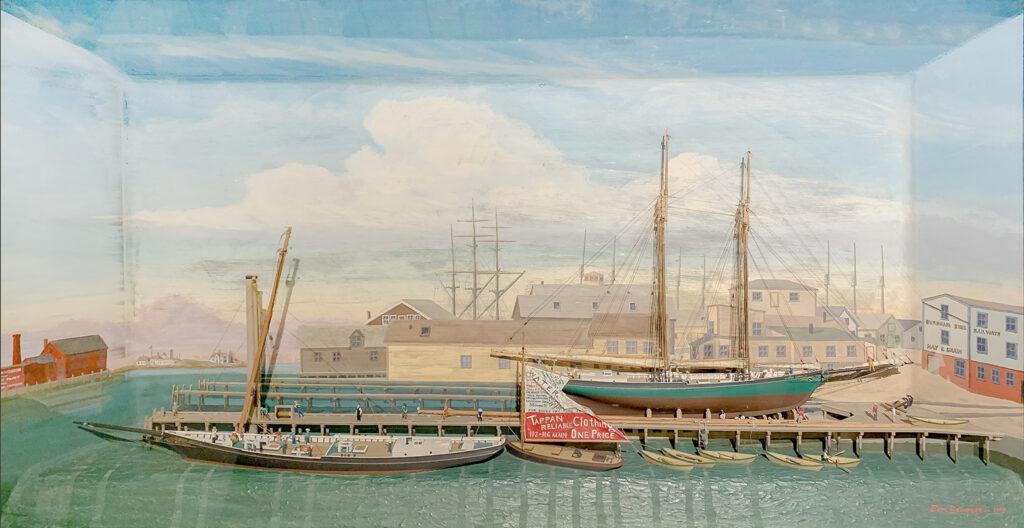
Erik A.R. Ronnberg, Jr., artist. “Hauling-out and Mast Stepping” 1997. Gift of Larry Costa, 2021.044
This discovery also revealed a gap in the original research. Historical paintings tend to focus on large, glamorous voyaging ships, while smaller working boats are often rendered with little detail or omitted entirely. Looking instead at more ephemeral materials—postcards, illustrations, advertisements, and maps—revealed additional evidence of branded sails.
Some examples must be treated cautiously. Exaggeration was common in 19th century advertising imagery. An advertisement in the Smithsonian’s American History Museum’s collection for Welde and Thomas, for example, depicts the America’s Cup yacht Defender carrying branded sails, despite photographs and paintings of the yacht showing no such markings.
Similarly, J.W. Williams’s 1879 “Map of the City of New York” depicts a sloop advertising “Rogers, Peet & Co.” on its sail; notably, the map itself was sponsored by Rogers, Peet & Co.
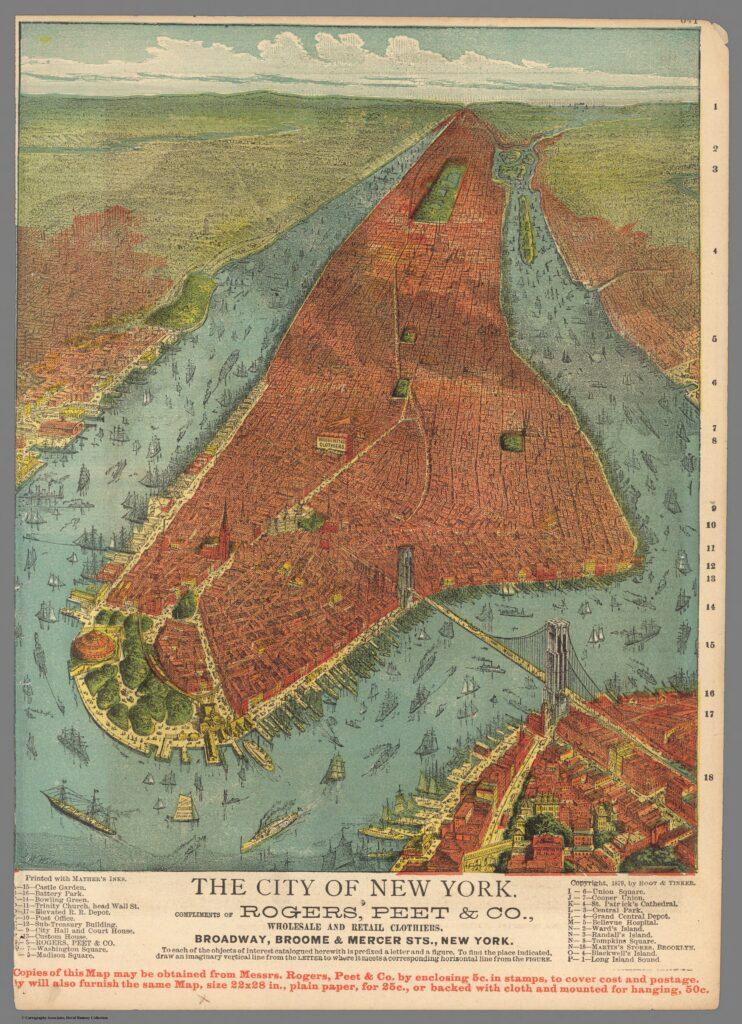
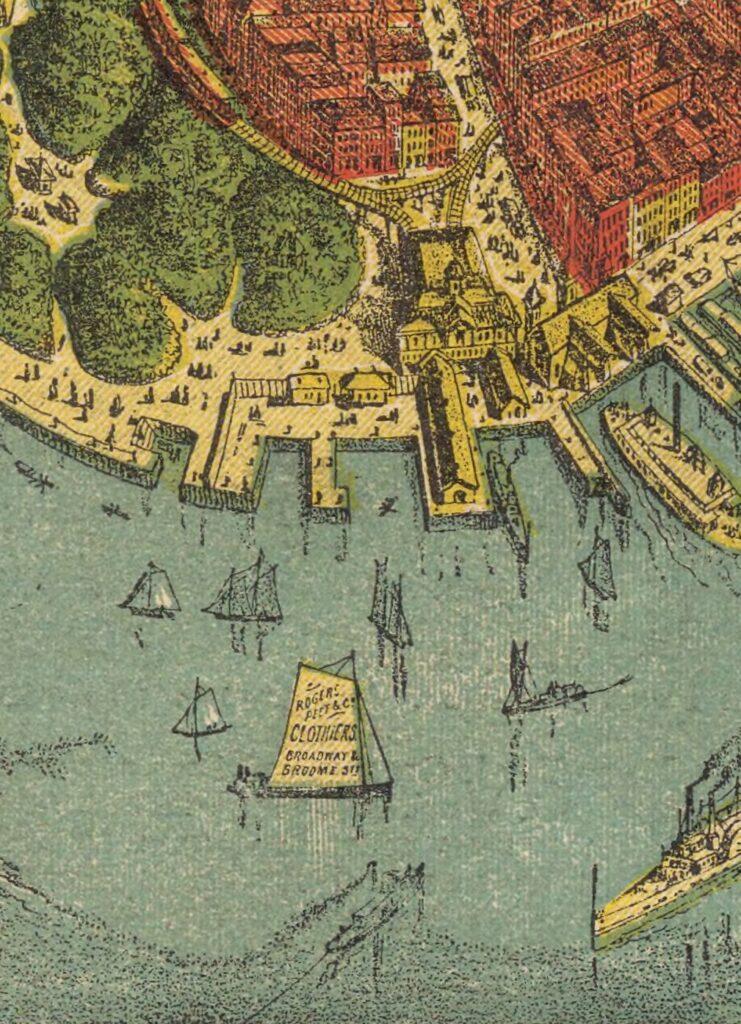
Root & Tinker, publisher. “The City of New York” 1879. David Rumsey Historical Map Collection.
Even so, these examples help explain why branded sails persist in collective memory despite their relative scarcity in archival records. Historically, sail advertising made the most practical and economic sense for small harbor-working vessels operating on predictable routes with consistent visibility.
What, then, does this mean for Pioneer?
History is never static. Objects continue to evolve long after their original purpose has passed. A painting may physically remain unchanged, yet its meaning shifts through time depending on how it is displayed, interpreted, and discussed. Ships are no different.
Pioneer has lived many lives. When she was first built as a coastal trader, she likely would not have been an ideal candidate for branded sails. But Pioneer is no longer a coastal trading vessel. Since joining the Seaport Museum fleet, her role has fundamentally changed. Her mission has become educational and public-facing: introducing visitors to maritime history while carrying the Museum’s presence throughout New York Harbor.
In many ways, Pioneer now operates in a context much closer to Aqua Pura than to an oceangoing cargo schooner. Her sails are highly visible, her routes are localized, and her purpose is communication as much as transportation. Within this contemporary context, using her sails for museum branding feels historically grounded rather than inauthentic.
With greater confidence in the historical framework, attention turned toward design and production.
Modern sail branding can be produced in many ways, but applying graphics to an existing working sail presents unique challenges. Painting directly onto sailcloth was quickly ruled out, as cured paint can alter the elasticity and performance of the fabric, potentially causing damage.
Dye sublimation offered the best technical solution, permanently dyeing the sail without materially changing the cloth, but the process required specialized equipment and facilities beyond the scope of the project.
The final solution was insignia sail cloth, a pressure-sensitive adhesive polyester fabric commonly used on racing yachts for numbers and graphics. Because insignia cloth shares similar elastic properties with sailcloth, it minimizes stress on the sail while remaining removable and temporary. It also allowed the graphics to be produced in-house, repaired if necessary, and ultimately removed without permanently altering the sail.
The design phase introduced a new challenge: how do you design graphics for a 60-foot sail on a 16-inch computer screen?
To better understand scale and visibility, a series of templates were created showing the sail from both near and far viewing distances. These templates became essential tools throughout the design process.

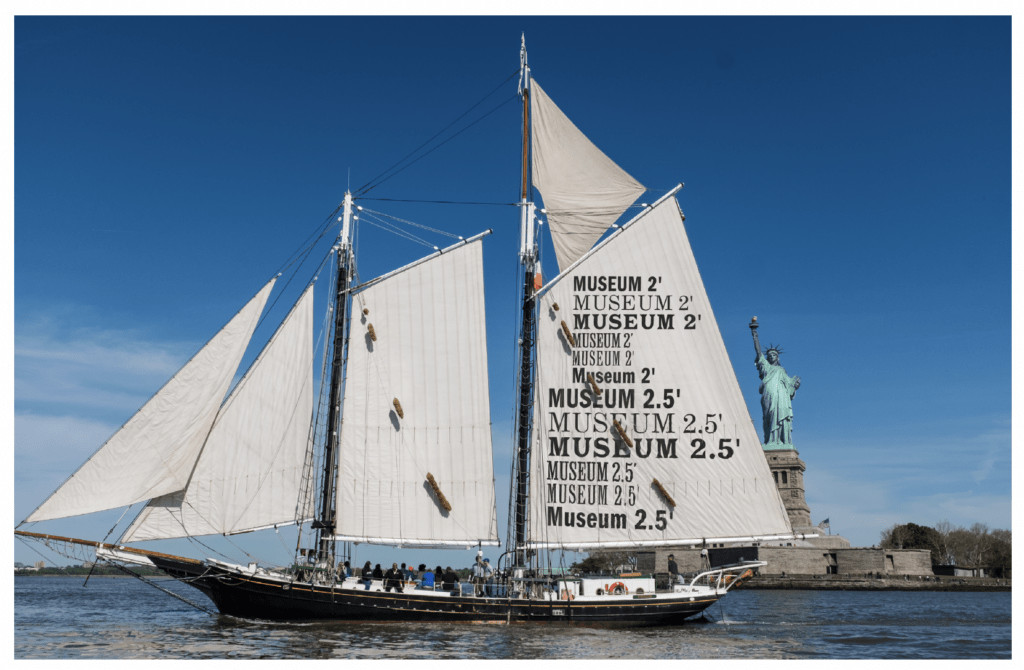
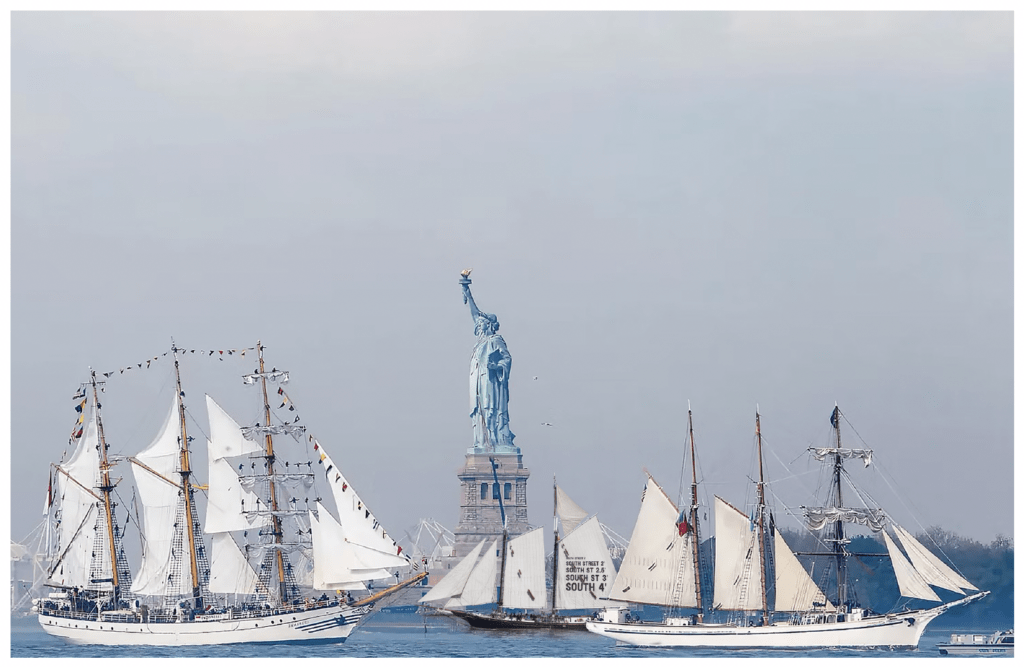
The first major question was scale. Type smaller than two feet quickly became illegible, while lettering over three feet felt oversized and visually overwhelming. A scale around 2-1/2 feet struck the best balance between readability and proportionality.
As a Museum with a historical letterpress print shop and large collection of historic type, the selection of typeface was equally important in this project. After testing several fonts commonly used by the Museum, the strongest performer was a serif typeface called Latin. Its relatively low stroke contrast and open counterforms allowed the letters to remain legible from a distance, unlike many sans-serif fonts that collapsed into indistinct shapes.

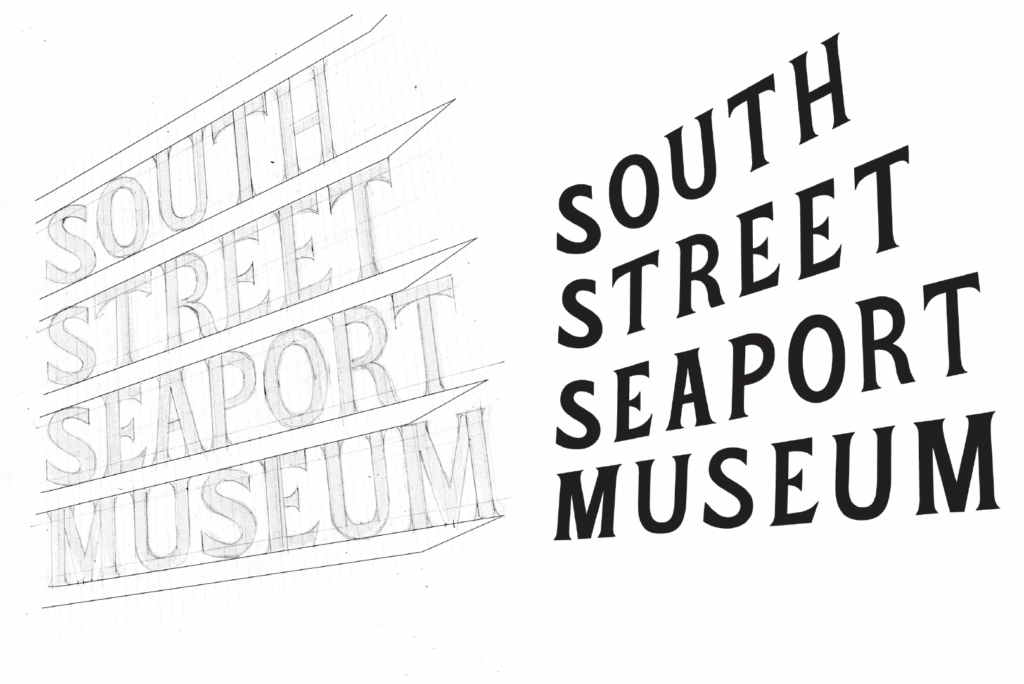
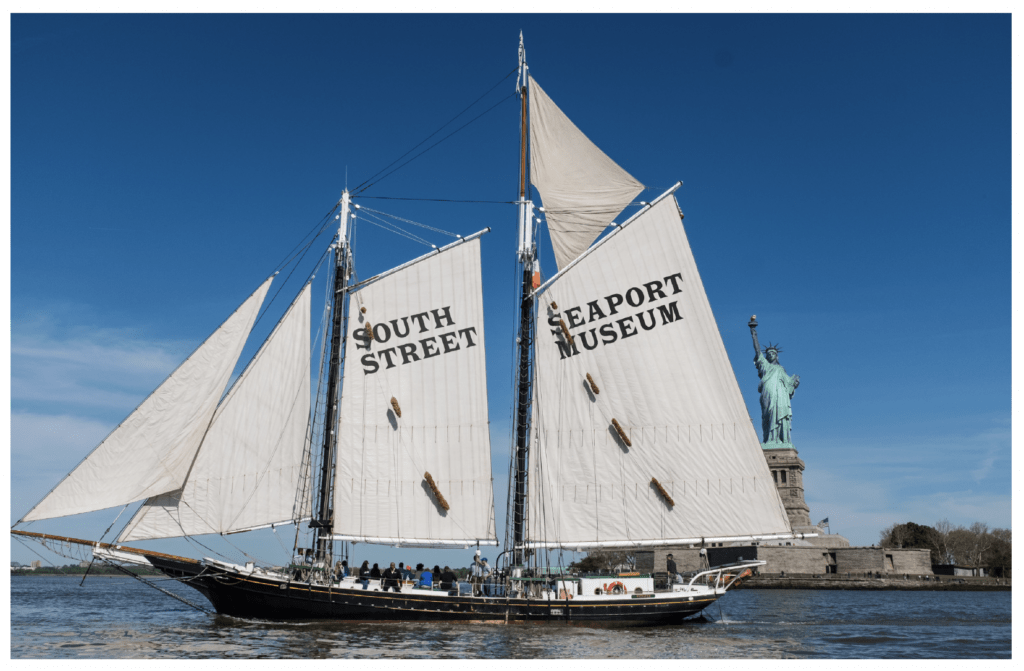
The orientation of the type was then tested against the geometry of the sail itself. Aligning the lettering with the lower spar felt natural, but eventually the design evolved further, allowing the lettering to flare and expand with the shape of the sail. This preserved the silhouette of Pioneer while integrating the typography into the sail’s overall form.
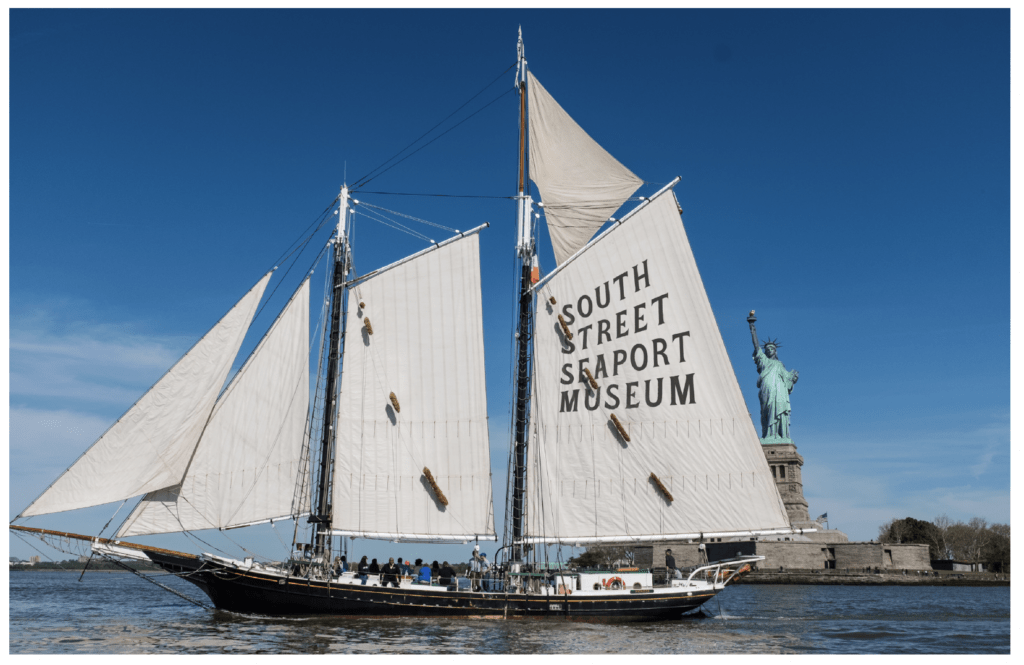
The final design placed all messaging on a single sail using custom-drawn letterforms approximately 2-1/2 feet tall. The shapes were first explored through pencil sketches before being refined digitally.
Production ultimately became a remarkably hands-on process. Because the graphics were too large for laser cutting, Seaport Museum volunteers hand cut every letter from insignia cloth using printed templates. Over six hours, five volunteers carefully produced each component by hand.
The sail itself had to be laid out in sections within the Museum’s Schermerhorn Row gallery space. Using measured grids and digital templates, each letter was aligned and lightly positioned before permanent adhesion. The insignia cloth adhesive allowed temporary repositioning until firm pressure activated a stronger bond.
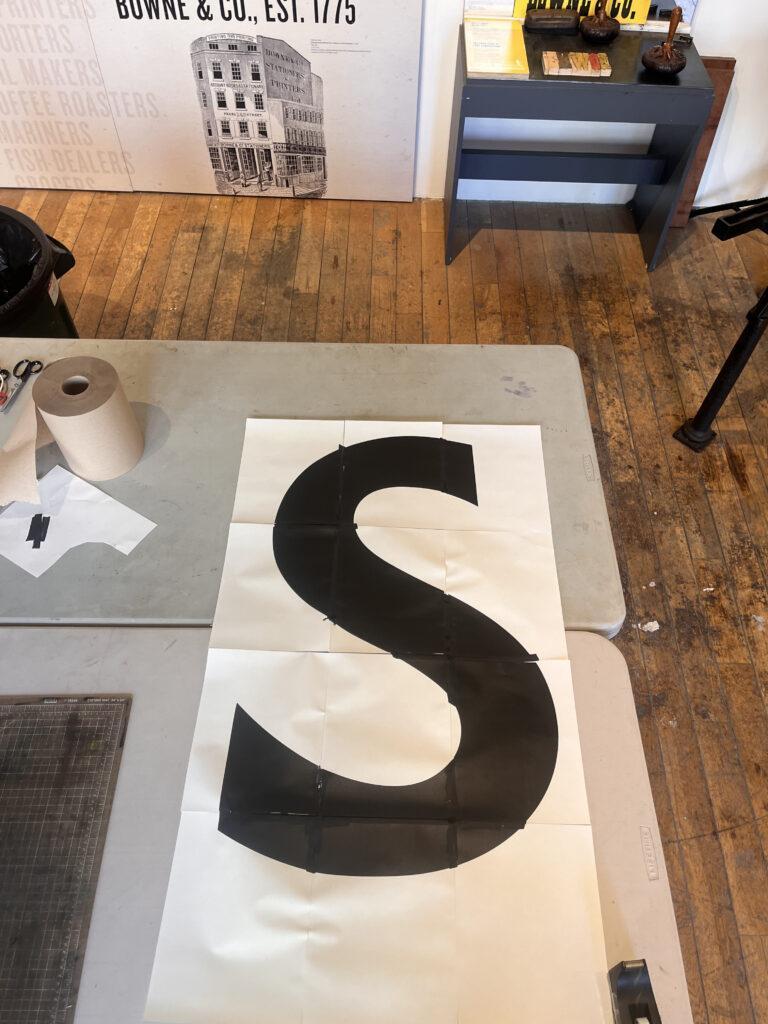
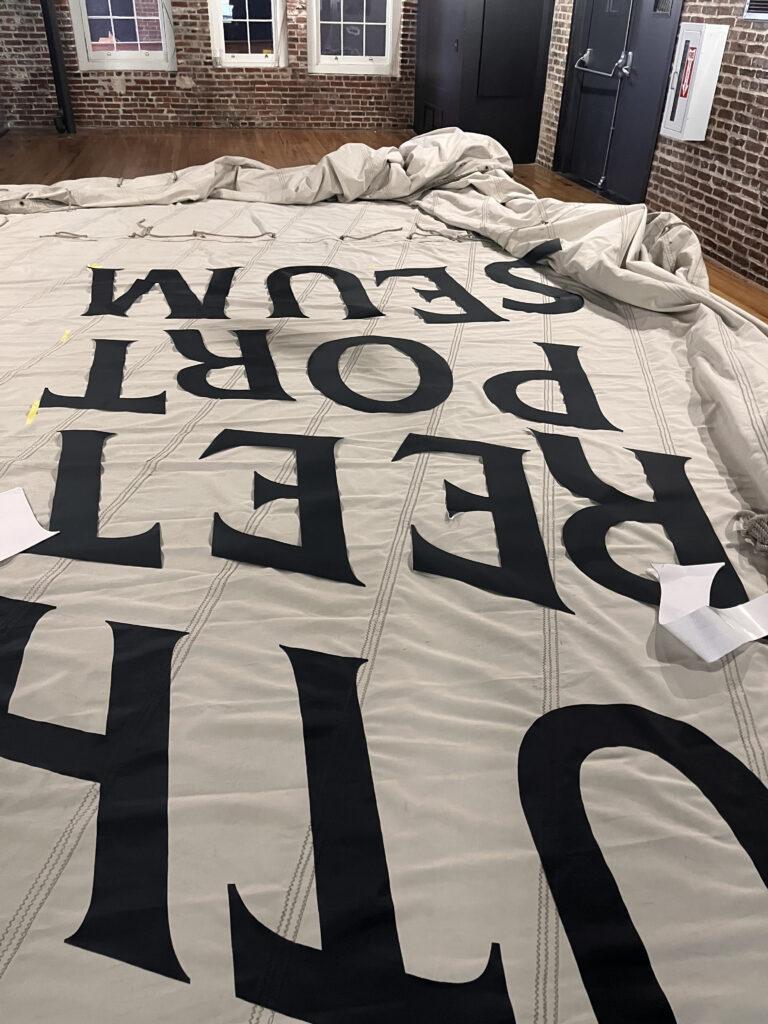
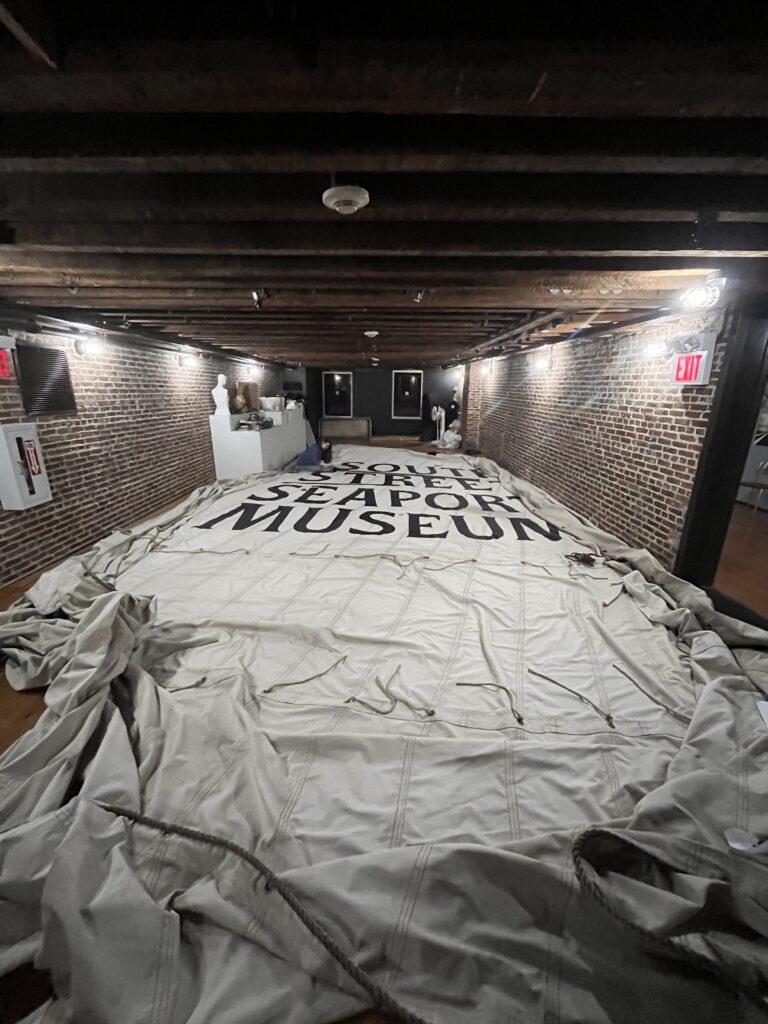
After one side cured for 24 hours, the sail was flipped and the entire process repeated on the reverse side. Once complete, the graphics were fully burnished into place.
The result is both contemporary and historically informed: a working sail that reflects not only Pioneer’s evolving role in New York Harbor, but also the long, complex relationship between maritime labor, visibility, communication, and public life.